
A wedding invitation video can do something a printed card cannot: introduce the feeling of the wedding before the guest arrives.
That does not mean every invitation needs dramatic animation, dozens of transitions, or a miniature wedding film. The strongest wedding invitation videos usually begin with one clear visual idea and let the names, date, place, and atmosphere unfold around it.
For some couples, that may be a quiet coastal scene. For others, it could be a garden opening into bloom, an editorial portrait sequence, a destination landscape, or even a traditional invitation design brought to life through subtle motion.
The goal is not simply to make the invitation move. It is to use movement in a way that makes the invitation feel more personal, more memorable, and more connected to the celebration.
Below are twelve directions worth considering if you are looking for wedding invitation video ideas that still feel elegant.
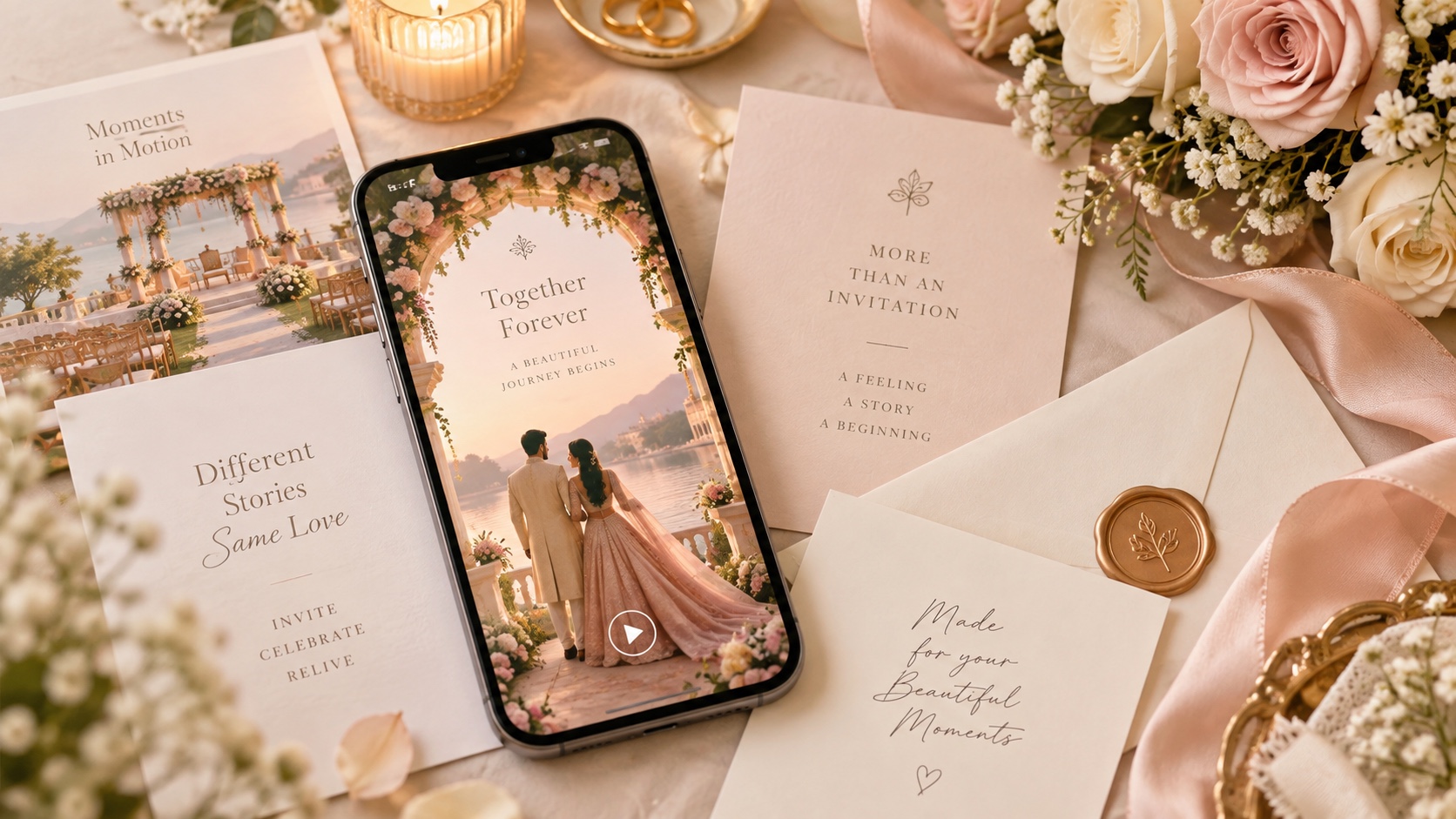
1. Cinematic Destination Wedding
If the location is one of the most exciting parts of the wedding, let it become the opening scene.
A destination wedding invitation can begin with a coastal town, mountain lake, European villa, desert landscape, tropical shoreline, or another view that immediately tells guests where the celebration is taking them. Names and wedding details can then appear gradually rather than covering the scenery from the first frame.
This works especially well when the destination itself is visually distinctive. Instead of treating the location as a line of text at the bottom of the invitation, the video makes it part of the story.
A destination-style invitation does not need to look like a travel advertisement. Keep the pacing calm, the typography refined, and the number of visual elements limited.
For more wedding-specific styles, browse TwistInvite Wedding Invitations.
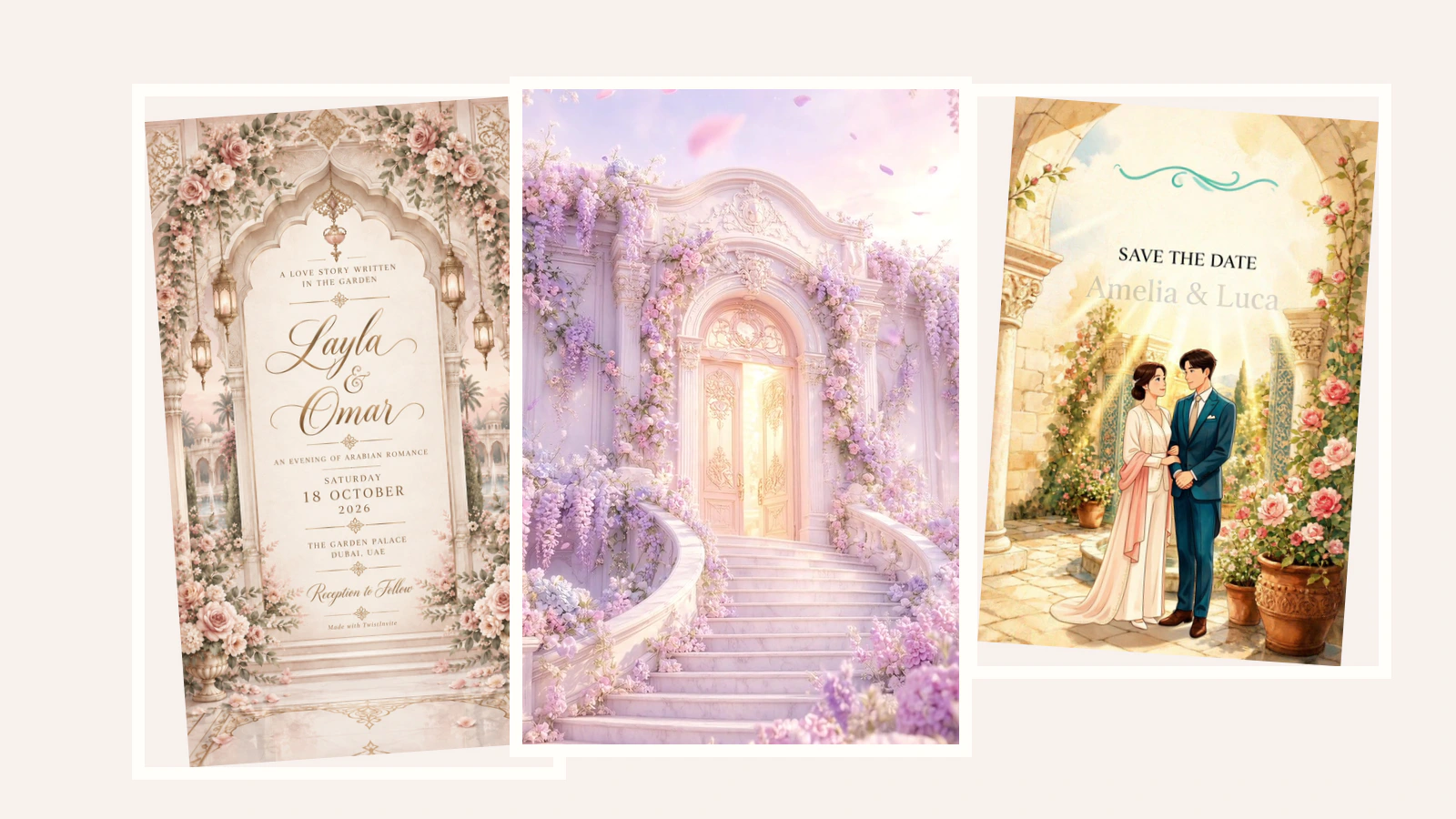
2. Garden Invitation That Comes to Life
A garden wedding naturally suits subtle motion.
Leaves can move gently in the foreground, light can shift across the scene, butterflies or petals can appear briefly, and floral details can frame the invitation without covering the text.
The key is restraint. If every flower is spinning, growing, glowing, and moving independently, the invitation quickly starts to feel artificial. A better approach is to make the garden feel alive while keeping the architecture, pathways, tables, arches, and other structural elements visually stable.
This style works particularly well for spring weddings, secret gardens, greenhouse venues, outdoor ceremonies, and romantic garden receptions.
3. Editorial Wedding Film
Not every wedding invitation needs to look soft or traditional.
An editorial invitation can use stronger typography, confident framing, elegant portraits, architecture, fashion details, or a luxury venue to create something closer to a magazine campaign.
The movement should still be simple. A slow camera push, clean cut, fabric movement, or sequence of two or three strong compositions is often enough.
This direction suits black-tie weddings, modern city weddings, luxury hotels, fashion-forward couples, and celebrations where the overall look is more refined than whimsical.
4. A Short Couple Photo Story
If you already have engagement photos or meaningful photographs together, a short photo-led invitation can feel more personal than a fully generated visual world.
The sequence can begin with one strong image, move through two or three photographs, and end on a clean final invitation screen with the wedding details.
Avoid turning it into a slideshow of twenty pictures. The invitation still needs a visual hierarchy. Choose a small number of images that work together in color and mood, then let the details remain easy to read.
This is also a good direction for couples who want a personal invitation without filming new footage.
5. Animated Save-the-Date
A wedding invitation video does not always need a full narrative.
A beautifully designed save-the-date can become a save the date video simply through controlled typography and graphic movement. The couple's names might appear first, followed by the date, city, and a short closing line.
This works especially well when the stationery design is already strong. Rather than replacing it, animation adds another layer to the existing identity.
Think of this as digital stationery in motion rather than a miniature movie.
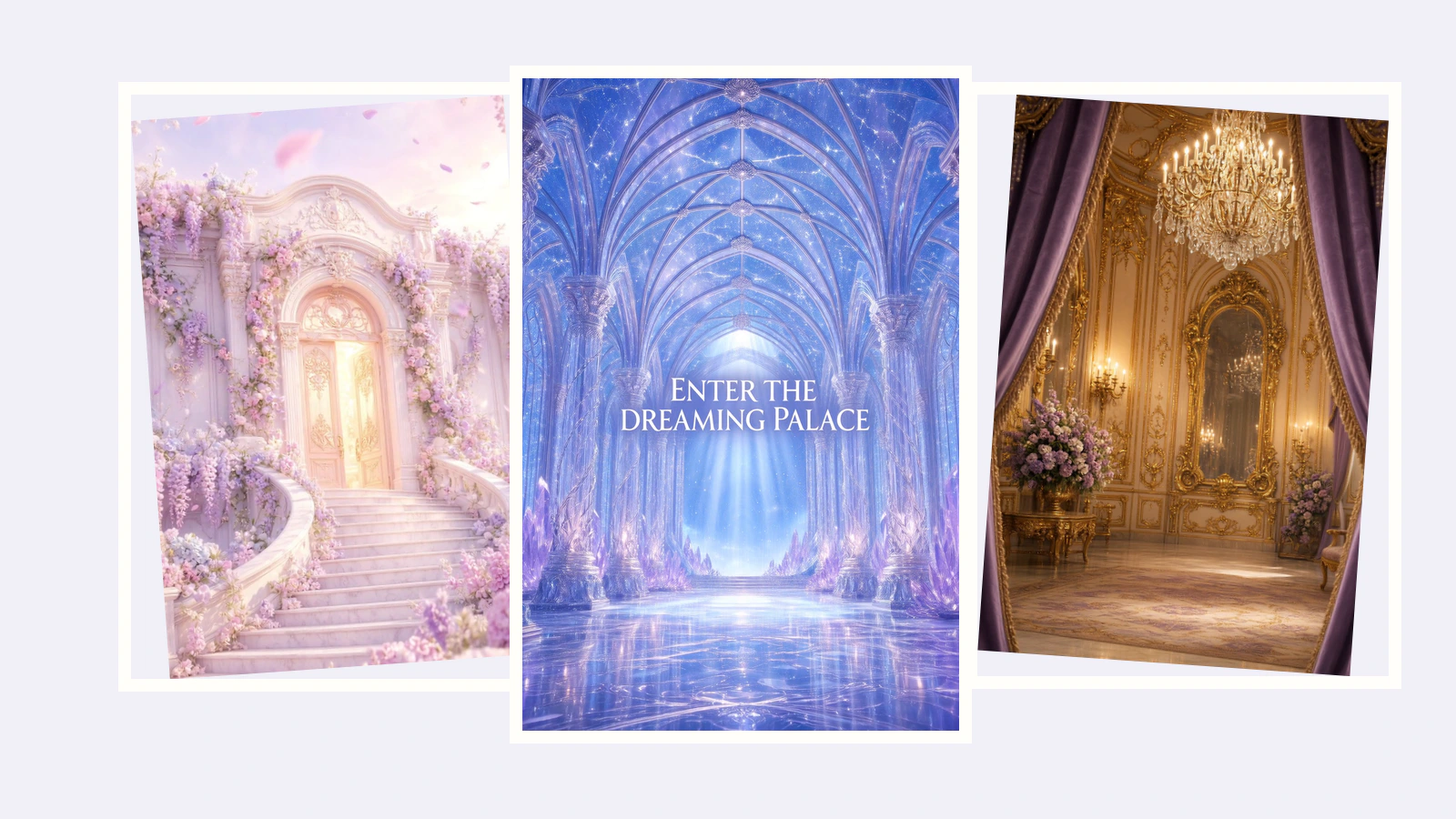
6. Invitation Inside a World
For couples who want something more imaginative, the invitation can feel like entering a place.
A gate can open onto a palace garden. A pathway can lead toward a distant celebration. A moonlit landscape can reveal the couple's names. A surreal or fantasy world can gradually introduce the event information.
This kind of wedding invitation video is especially useful when the wedding theme itself has a strong visual identity.
The challenge is readability. The world should support the invitation rather than compete with it. Important text needs clean space, enough contrast, and enough screen time.
If you want to explore video-first formats like this, see the TwistInvite Video Invitation Maker.
7. Minimal Motion, Maximum Typography
Some of the most elegant video invitations use very little imagery.
A textured background, beautiful serif type, carefully spaced names, and a few subtle transitions can feel more expensive than a heavily animated scene.
This approach works well for couples who want something timeless and modern. It also makes practical information easier to absorb because the viewer is not watching several visual elements at once.
The movement can come from typography appearing gradually, a small line drawing, changing light, or a clean transition between information screens.
8. Wedding Venue Reveal
If the venue is visually impressive, make the invitation build toward it.
The opening might show a small detail—an archway, staircase, balcony, garden gate, or coastline—before revealing the wider location. Wedding information can appear as the visual opens up.
This gives the invitation a natural sense of progression while keeping the venue central.
It works particularly well for castles, villas, resorts, historic buildings, gardens, vineyards, and destination properties.
9. Seasonal Wedding Invitation
Season can become the entire design system.
An autumn invitation might use warm leaves, amber light, lakeside scenery, or richer typography. Winter can lean into candlelight, snow, crystal textures, or evening interiors. Spring can use soft greenery and floral movement, while summer can feel brighter and more open.
A seasonal design becomes stronger when it uses atmosphere rather than obvious decorative clichés.
The invitation does not need a snowflake animation simply because the wedding is in December. Often the lighting and palette communicate the season more elegantly.
10. Vintage Film-Inspired Invitation
A soft film texture, restrained grain, faded colors, and slower pacing can create a nostalgic wedding invitation without making it look old-fashioned.
This direction works well with engagement photography, European venues, intimate weddings, and romantic outdoor scenes.
Keep text clean and modern enough to remain readable. The vintage quality should come from the atmosphere and image treatment rather than intentionally blurry typography.
11. Video Invitation With Online RSVP
A beautiful invitation becomes more useful when the guest can respond without leaving the experience and remembering to reply later.
A video-first wedding invitation can introduce the celebration visually, then lead naturally into an online RSVP flow where guests can confirm whether they are attending and provide the information the host needs.
This separates two jobs nicely: the video creates the emotional first impression, while the RSVP interaction stays simple and functional.
If guest response is important, see the TwistInvite RSVP Website and our guide to online invitations with RSVP.

12. One Beautiful Scene
A wedding video invitation does not need five scenes to feel complete.
Sometimes the strongest option is one carefully designed composition: a couple walking toward a lake, an outdoor reception at sunset, an invitation resting inside a garden setting, or a beautifully framed wedding venue.
The background can move gently while the information appears in stages.
This keeps the invitation visually cohesive and can feel much more premium than constantly cutting to something new.
What Information Should a Wedding Invitation Video Include?
No matter how visual the invitation becomes, the basic information still needs to be easy to find.
Most wedding invitations should clearly communicate the couple's names, wedding date, time, location or venue, and what the guest should do next. If RSVP is required, that action should also be obvious.
Secondary information does not need to sit inside the main video if the invitation experience provides another place for details.
The video should create clarity and excitement, not make guests replay it three times just to find the date.
How Long Should a Wedding Invitation Video Be?
There is no perfect duration for every wedding invitation.
A simple animated save-the-date may only need a few moments, while a more cinematic invitation can naturally take longer. The important question is whether each second is doing something useful.
If the viewer is waiting through long empty transitions, shorten it. If the information disappears before it can be read, slow it down.
Good pacing feels intentional rather than rushed or padded.
Wedding Invitation Video vs. Static Digital Invitation
A static digital invitation is often the better choice when simplicity and immediate readability are the priorities. It gives guests all the essential information at once and is easy to share.
A wedding invitation video becomes more useful when atmosphere is part of the message. Motion can show a destination, reveal a venue, create a romantic mood, or turn the wedding theme into a small visual experience.
Neither is automatically better. Choose the format that fits the wedding.
For a broader explanation of the formats, read How to Make a Digital Invitation.
Frequently Asked Questions
What is a wedding invitation video?
A wedding invitation video is a digital wedding invitation that uses movement, video, photography, animated imagery, or typography to present the wedding details over time instead of using only a static card.
How do I make a wedding invitation video?
Start with the wedding's visual direction, choose a template or video invitation format, add the couple's names and essential event details, keep each screen readable, preview the invitation on mobile, and add RSVP if needed. Explore the TwistInvite Video Invitation Maker.
Can a wedding video invitation include RSVP?
Yes. A video invitation can lead into an online RSVP experience so guests can view the invitation and then submit their attendance response digitally.
What should I include in a wedding invitation video?
Include the couple's names, wedding date, time, venue or location, and a clear RSVP action when required. Keep secondary information outside the main visual when possible.
Are wedding invitation videos good for destination weddings?
Yes. Destination weddings are particularly well suited to video because the location itself can become part of the invitation atmosphere.
Can I send a wedding invitation video digitally?
Yes. Digital wedding invitations can be shared electronically depending on the invitation platform and sharing method you use.
Create a Wedding Invitation That Feels Like Your Wedding
A wedding invitation video works best when it does not feel like a generic animation with names placed on top.
Start with the mood of the celebration, choose one strong visual idea, and let the movement support the event information.
Explore Wedding Invitations, the Video Invitation Maker, or add Online RSVP.
TwistInvite is free to start.
Create it in the TwistInvite app
Download free on iPhone or Android, then share one link with your guests. There are also separate guides to indian wedding invitations for a beautiful, grand celebration, watercolor wedding invitations for a soft, romantic celebration, and wedding invite ideas that tell more of your story.