
Introduction
The easiest way to make a wedding invite feel different is not to make it more decorative. Ready-made designs are on our wedding invitations page, each with RSVP built in.
Make it more specific. (For a broader look at styles, formats, and trends, start with our wedding invitation ideas guide.)
A generic invitation says that two people are getting married. A memorable invitation reveals something about which two people they are, where the celebration is happening, or how guests should feel when they arrive.
That can happen through a photograph, a meaningful location, a line of personal wording, a favorite song, a short video, or even the way the invitation opens.
Personalization is one of the clearest directions in current wedding invitation design. Recent 2026 trend coverage points toward couple-specific artwork, venue details, handwritten elements, personal stories, and interactive digital experiences rather than one universal style.
If you want a wedding invite that feels less like a template and more like an introduction to your day, start with the story rather than the decoration.
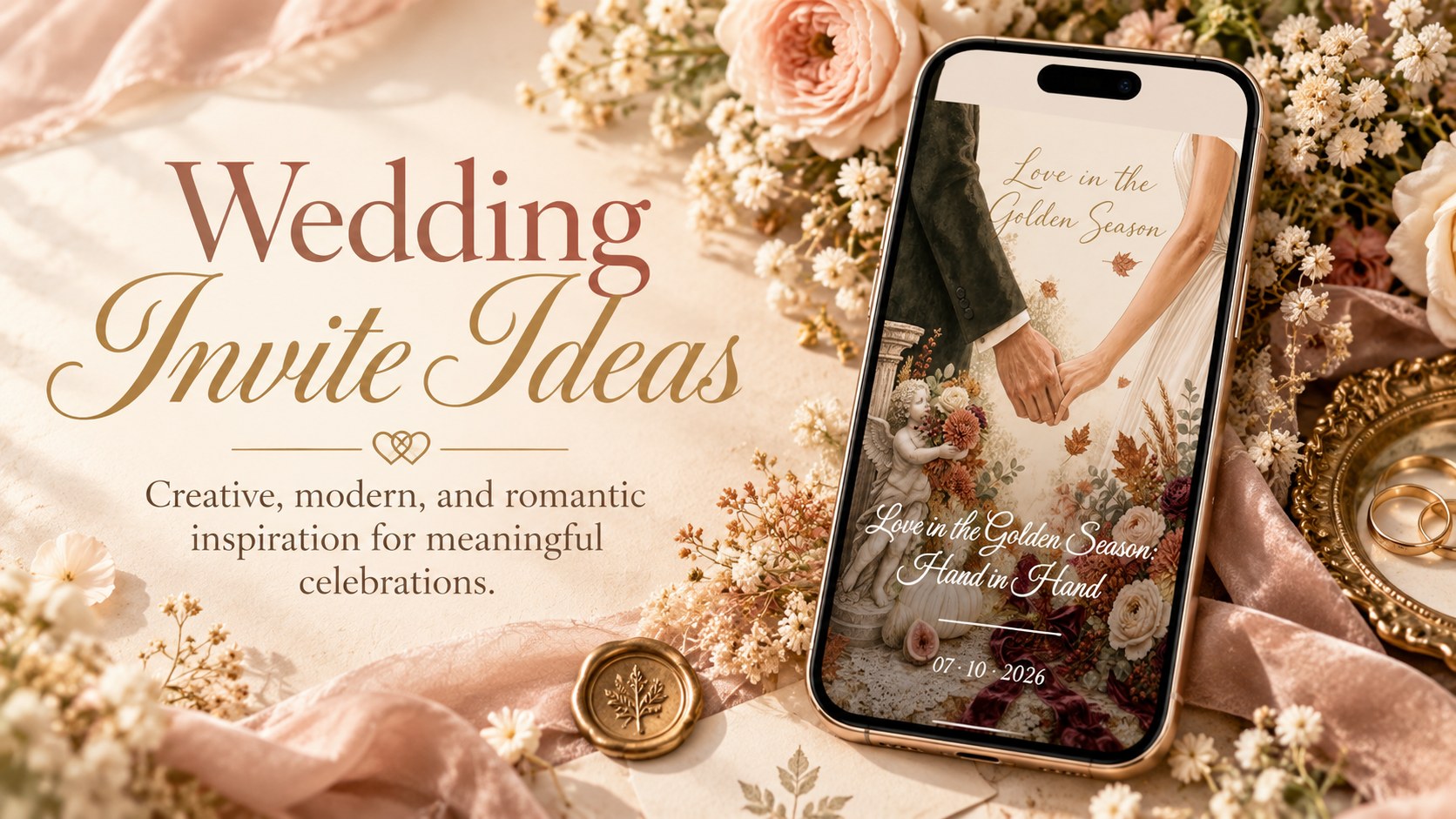
Featured TwistInvite DesignGarden of DevotionA personal invitation look for creative wedding invite ideas that tell more of your story.Explore InvitationsTell One Part of Your Story, Not Your Entire Relationship
Couples sometimes try to fit everything into the invitation: first date, proposal, travel, pets, childhood photos, favorite songs, and wedding details.
That usually becomes too much.
Pick one meaningful thread.
Maybe you met while traveling, so the invite opens on a landscape connected to that place.
Maybe the venue is the same garden where you got engaged.
Maybe your dog is part of the ceremony and appears as a small illustration.
Maybe one photograph says more about the two of you than any elaborate graphic could.
The invitation should offer a glimpse, not a documentary.
Start With a Place That Matters
Place is one of the strongest ways to personalize an invitation without needing a long explanation.
A venue illustration can introduce the wedding location. A skyline can represent the city where you met. A coastline can recall a shared trip. A family home can make a backyard wedding feel deeply personal.
Current wedding stationery trends increasingly use place-specific illustration because the setting itself becomes part of the wedding story.
This works particularly well when the architecture or landscape is visually distinctive.
Use Personal Photos in a More Editorial Way
A personal photo does not have to become a large engagement portrait behind text.
Try using photography with more intention.
A close crop of hands can feel intimate. A black-and-white image can create a quieter mood. A sequence of two or three small photos can feel like a film strip. A childhood image can become part of a playful storytelling concept.
For digital invitations, the photo can appear briefly before the final event information rather than competing with it.
The important thing is to separate atmosphere from utility.
Guests should enjoy the image, then still be able to find the date and location instantly.
Build an Invitation Around Music
Music can create emotion faster than decoration.
For couples who share a meaningful song, imported audio can change the entire feeling of a digital invitation.
The visual experience might begin with a few seconds of music over:
- a venue scene
- a photograph
- a slow landscape reveal
- the couple’s names
- a short video clip
The song should support the invitation rather than overpower it.
You do not need a full music video. Sometimes ten seconds of the right atmosphere is enough.
Use Video as the Opening, Not the Whole Invitation
Video wedding invites can become overly long because couples try to tell the entire story before guests reach the date.
A better approach is to treat video as the entrance.
A few seconds of motion can establish the mood, then the invitation settles into a clear final frame.
For example:
A couple walks through autumn trees. The scene fades. Their names appear. The final invitation holds with the wedding details.
Or:
The camera approaches a snowy chapel. Warm light comes on inside. The invitation information appears over a calm final shot.
This is one reason digital wedding invitations are becoming more cinematic: motion is being used to create a moment rather than simply animate text.
Make the Wording Sound Like You
Personalization is not only visual.
Compare:
Together with their families, Emma and Daniel request the pleasure of your company…
with:
We’re getting married, and it wouldn’t feel right without you there.
Neither is automatically better.
The right version depends on the wedding.
Formal wording works beautifully for some celebrations. Conversational wording works better for others. Current etiquette guidance also reflects that there is no single mandatory formula; tone, hosting structure, dress code, and RSVP information can all be adapted to the couple and event.
The invitation should sound like the people sending it.
Turn a Shared Interest Into Visual Language
A wedding invite can reference something the couple loves without becoming themed merchandise.
For music lovers, use editorial typography inspired by record sleeves.
For readers, use beautiful page composition rather than fake book covers.
For travelers, use landscapes or route lines rather than passport stamps everywhere.
For food lovers, a restaurant-menu-inspired layout can work beautifully for a dinner-focused wedding.
For film lovers, cinematic framing, still photography, or title-sequence pacing can create a subtle reference.
The best idea is often indirect.
It gives the invitation personality without turning the wedding into a costume.
Create a Better Guest Experience, Not Just a Better Image
Creative wedding invites should still make the event easier for guests.
Digital formats can keep the invitation, personal storytelling, and RSVP connected.
With TwistInvite, couples can build a mobile-first digital or video invitation, use their own media or imported audio, and collect Going, Maybe, or Can’t make it responses without requiring guests to create an account.
That means the creative part and practical part do not need to compete.
The invitation can feel emotional when it opens and still become useful when guests need to check the details later.
Small Details Can Make a Bigger Difference Than More Features
You do not need ten interactive elements.
One personalized detail can carry the whole concept.
A venue illustration. A photograph nobody else has. A handwritten line. A favorite song. A winter landscape that resembles the real location. A flower from the actual bouquet.
Choose the detail with meaning and give it enough space.
That often looks more thoughtful than trying to prove how many things an invitation can do.
Conclusion
Creative wedding invite ideas work best when creativity has a reason behind it.
Start with one piece of your story: a place, image, sound, relationship detail, shared interest, or atmosphere. Then design around it rather than adding personalization at the end.
The invitation does not need to explain everything about the couple.
It only needs to create a moment that feels unmistakably theirs and give guests the information they need to become part of what happens next.
Create it in the TwistInvite app
Download free on iPhone or Android, then share one link with your guests.