
Halloween invitations cover more than one kind of night. Some hosts are throwing a full costume party. Others are planning pumpkin carving on the porch, a school trunk or treat, a birthday that falls in October, or a quiet movie marathon with friends.
This page is your broader Halloween invitation map: parties, kids’ events, dinners, neighborhood gatherings, and smaller October traditions. You will see how the invite should change by event type, what details matter most, and where to go next for deeper guides.
If your event is clearly a party with guests, music, and a dress code, start with Halloween party invitations. If you need phrase banks and rhymes, use Halloween party invitation wording.
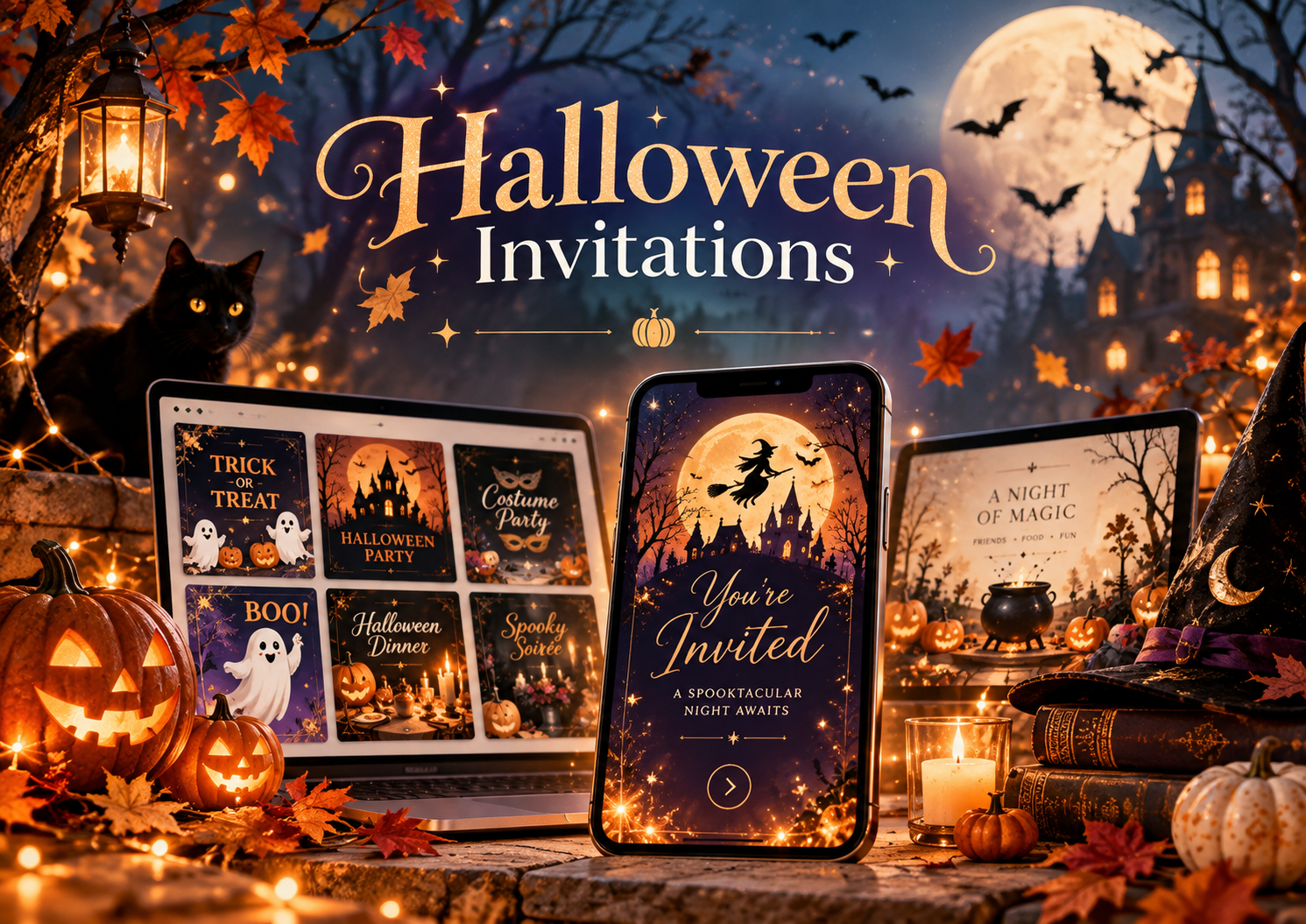
How Halloween Invitations Differ by Event
A party invite sells atmosphere and a dress code. A trunk-or-treat invite prioritizes arrival windows, parking, and kid safety. A pumpkin-carving night needs bring-lists and cleanup notes. A birthday hybrid has to celebrate the person and the season without confusing guests about gifts or cake.
Before you design anything, name the gathering in one plain sentence. “Kids’ pumpkin carve at our house” and “adult gothic dinner for eight” should never share the same template energy—or the same checklist.
Parties, Costumes & Grown-Up Nights
Costume parties, cocktail nights, and adult house parties still sit under the Halloween umbrella, but they deserve party-first planning: start times, plus-ones, contests, and clear costume rules. Point guests (and yourself) to the dedicated Halloween party invitations guide when that is the real format.
For stylish after-dark drinks, Halloween cocktail party invitations and adult Halloween party invitations go deeper on tone and logistics. Dinner-forward evenings belong with Halloween dinner party invitations.
Kids, Families & Soft-Spooky Events
Family Halloween invitations should feel friendly first. Parents need start and end times, costume notes, candy or allergy mentions, and whether adults stay. Soft illustrations—pumpkins, friendly ghosts, storybook nights—usually outperform jump-scare art.
Explore kids Halloween party invitations for parent logistics and cute Halloween invitations when the visual mood is sweet rather than scary.
Pumpkin Carving, Movie Nights & Cozy October Plans
Not every October invite is a party flyer. Pumpkin carving nights work best when you say whether guests bring their own pumpkin, what tools you provide, and whether kids or adults are the focus. Details live in pumpkin carving invitations.
Movie nights need start time, seating vibe (living room, backyard projection, pajamas welcome), snack plan, and a note on whether the lineup is family-friendly or horror-heavy. See Halloween movie night invitations.
These formats are perfect for digital invites: short guest lists, easy RSVPs, and last-minute weather changes.
Trunk or Treat, Neighborhood & Community Events
Community Halloween invitations carry different weight. Schools, churches, and neighborhood groups need arrival instructions, parking maps or lot notes, costume expectations, candy guidelines, volunteer asks, and a rain plan.
Keep the tone clear and welcoming rather than salesy. Trunk or treat invitations covers the checklist hosts and organizers actually use.
Halloween Birthdays & Hybrid Celebrations
October birthdays often blend cake and costumes. The invitation should lead with the birthday—name, age if relevant, gift notes—then layer Halloween atmosphere so guests know whether to dress up.
Halloween birthday invitations separates birthday logistics from generic party planning. For birthday formats beyond Halloween, digital birthday invitations is a useful companion.
Style Families Worth Knowing
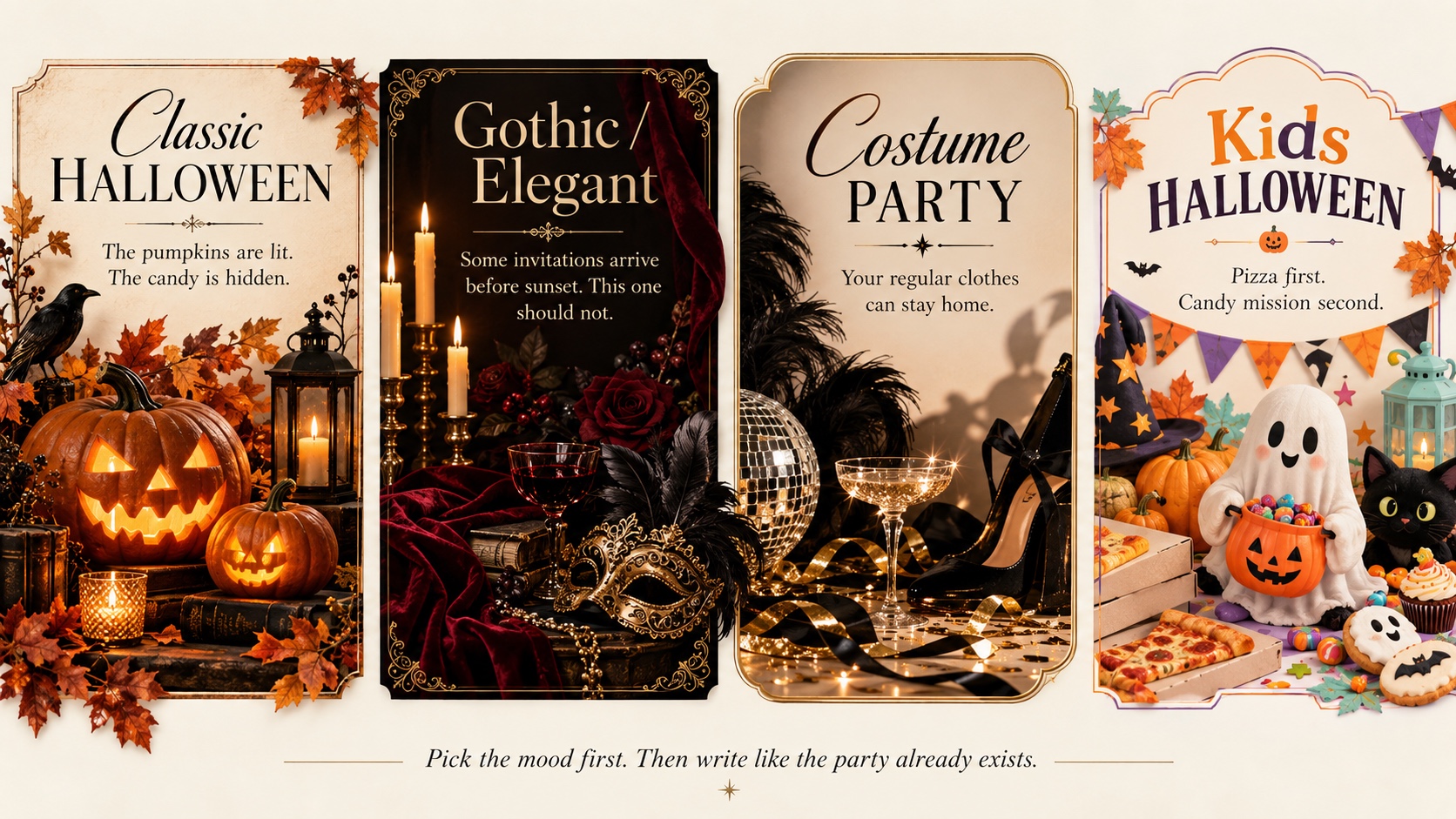
Halloween invitation design clusters into a few useful moods:
- Classic orange and black for traditional parties
- Cute / storybook for kids and family nights
- Gothic / candlelit for dinners and dramatic adult evenings
- Witchy / celestial for moonlit mystical vibes
- Cinematic for movie marathons and atmospheric house parties
For a style-first tour (not another planning checklist), open Halloween invitation ideas. Aesthetic deep-dives include gothic Halloween invitations, cute Halloween invitations, and witchy Halloween invitations.
Browse Halloween invitation designs.
Digital Formats, Video & RSVP
Halloween guest lists change fast—costumes fall through, neighbors get added, weather shifts outdoor plans. Digital invitations keep one source of truth. Guests can reply Going, Can’t make it, or Maybe without signing up. To pick a design now, browse our Halloween invitation templates.
Learn the workflow in how to make digital invitations and online invitations with RSVP. A short host video—porch lights, table setup, or a quick “see you Saturday”—pairs well with details; start with how to make a video invitation or the video invitation maker.
Paper still shines for keepsakes and classroom handouts. If you mix print and digital, copy the same times and addresses into both. Digital invitations vs paper invitations outlines the tradeoffs.
What Almost Every Halloween Invitation Should Include
- Host or organization name
- Event type in plain language
- Date, start time, and end or pickup time when it matters
- Location, parking, or entry notes
- Costume or dress expectation
- Food, candy, or bring-list notes
- RSVP or registration path and deadline
- One atmosphere line that matches the real event
A few sample lines are fine on supporting pages; for a full wording bank, use Halloween party invitation wording.
Neighborhood, Classroom & Workplace October Notes
Halloween invitations also show up outside private homes. A classroom party handout needs school-approved timing and allergy rules. A neighborhood block gathering needs rain plans and sidewalk safety. A casual workplace costume coffee needs HR-friendly language and a clear end time so people can return to meetings.
Keep organizational invites shorter than party pillars. Lead with who is hosting, whether kids are included, and how to opt in. Soft visuals from cute or classic styles usually travel better in shared inboxes than gothic drama—unless your team culture genuinely wants the latter.
When the event is truly a full costume party with after-hours energy, do not stretch this broader hub to cover every dress-code nuance. Send readers to the party pillar and the costume guide instead of duplicating those checklists here.
Sharing Strategy for Mixed Guest Lists
October guest lists often mix relatives who prefer a text, friends who live in group chats, and neighbors who still expect a printed card on the porch. One digital invitation link can serve all three if the details stay identical everywhere you share them.
Add a calendar-friendly subject line when you email: “Halloween pumpkin night — Oct 19, 5 PM.” For printouts, leave a blank RSVP phone line or QR that points to the same digital reply page. Consistency matters more than choosing a single channel.
If you want movement and personality, a short video welcome works for family dinners and birthday hybrids alike—keep clips under fifteen seconds and put the time on screen. Hosts using TwistInvite can attach their own media and audio; there is no built-in music library to browse.
Decision Framework Before You Design
Ask three questions: Is this a party or a quieter gathering? Who is the primary audience—kids, adults, or mixed community? How formal is the dress note? The answers route you to the right supporting article and prevent a mismatched template.
Then pick atmosphere: cute, classic, gothic, witchy, or cinematic. Design follows the decision; it should not make the decision for you. When you are ready to look at real layouts, return to the Halloween collection deep link and filter with those answers in mind.
Choose the Event, Then the Look
Decide whether you are hosting a party, a kid-focused afternoon, a community trunk or treat, or a quiet October night at home. That single choice steers design, wording length, and RSVP style better than any generic “spooky” template.
When you are ready to browse designs that fit the night you named, open the Halloween collection and personalize from there.
Frequently Asked Questions
What is the difference between Halloween invitations and Halloween party invitations?
Halloween invitations is the broader category—any October gathering. Halloween party invitations focus on parties with guests, atmosphere, and usually a dress or costume plan.
Do I need different invites for kids and adults?
Usually yes. Kids’ invites prioritize pickup, soft visuals, and parent notes. Adult invites can run later, darker, and more stylish.
Can one Halloween invitation work for mixed ages?
Yes if you spell out the schedule: family-friendly hours first, optional adult hangout after kids leave, and clear costume notes for each group.
When should Halloween invitations go out?
Community events and costume-heavy parties: two to three weeks ahead. Small cozy nights: about a week. Birthdays that need gifts and costumes may need the longer window.
Are digital Halloween invitations appropriate for schools or churches?
Often yes, especially when you need registration counts and easy forwarding. Confirm any print requirements your organization still expects.
Create it in the TwistInvite app
Download free on iPhone or Android, then share one link with your guests.