
If you are planning a wedding, birthday, baby shower, engagement party, or another meaningful gathering, one of the earliest choices is surprisingly simple: should you send a paper invitation or a digital invitation card?
Paper invitations still feel classic, sentimental, and tangible. A digital invitation card offers a different kind of experience: it can introduce the mood, help guests find the details, connect directly with RSVP, and remain easy to revisit from a phone. The right format depends on your event, your guests, and the feeling you want to create.
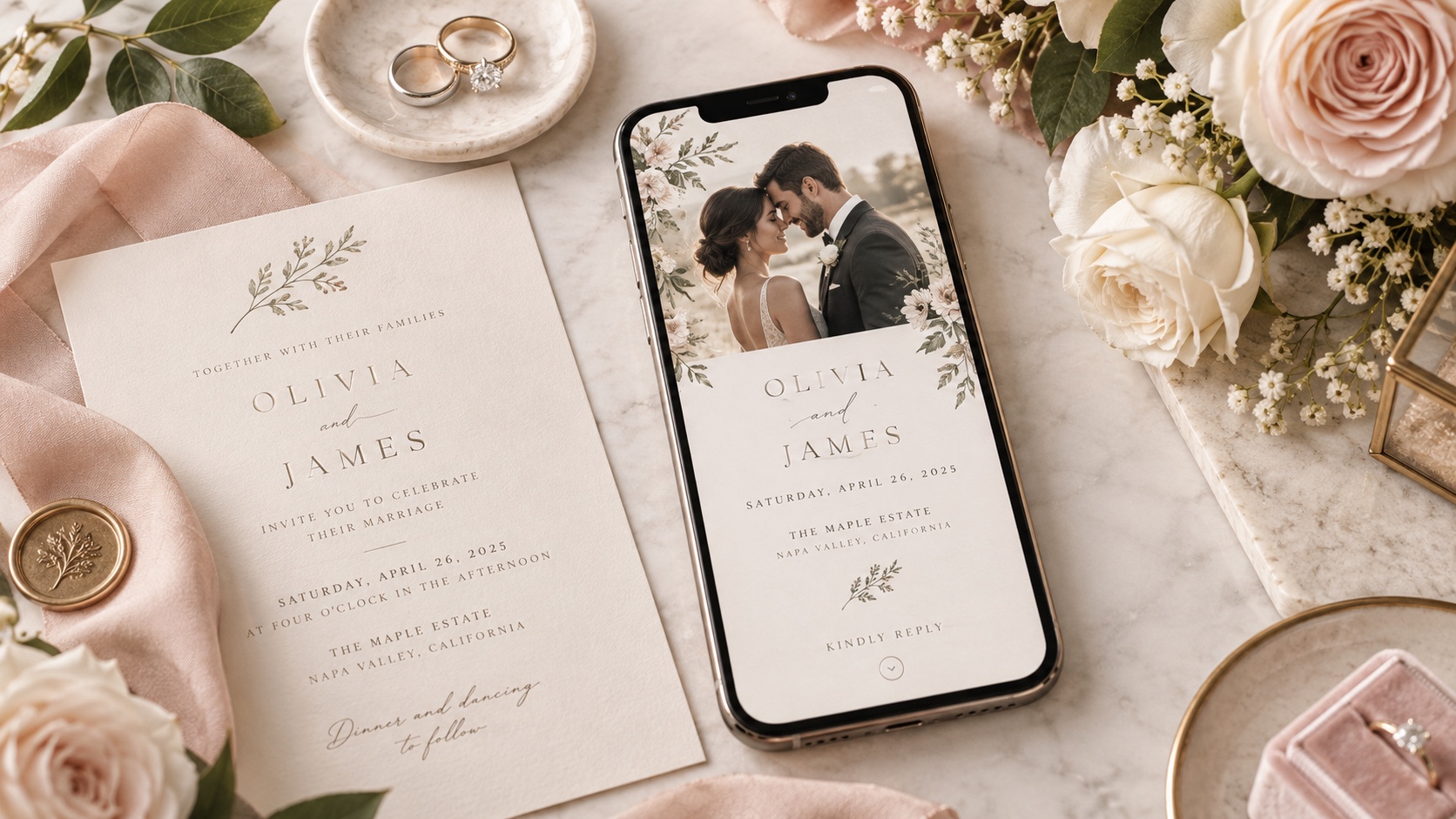
Quick Answer: Which One Should You Choose?
Choose paper when tradition, tactile stationery, or a physical keepsake matters most. Choose a digital invitation card when you value fast sharing, easy updates, online RSVP, and more room for video, photography, or motion.
For many modern events, digital is the more practical choice because the invitation, event details, and response flow can live together. A hybrid approach also works well when you want the emotional value of paper and the convenience of digital guest communication.
What Is a Digital Invitation Card?
A digital invitation card is an invitation guests receive electronically, usually through a link, text, email, or social message. Some are static designs that resemble printed stationery, while others use animation, video, photography, or interactive event details.
The format can do more than display a date and location. A digital wedding invitation can feel cinematic and romantic, a birthday invitation can feel energetic and playful, and a baby shower invitation can feel warm and personal. If you are building one from scratch, this guide to making a digital invitation walks through the process.
Why Paper Invitations Still Appeal to People
Paper invitations have real strengths. They create a physical ritual: an envelope arrives, the guest opens it, and the stationery can remain on a desk or become a keepsake. Specialty paper, letterpress, foil, embossing, ribbon, wax seals, and custom illustration can make the invitation itself part of a formal event’s design.
That physical quality can be especially meaningful for weddings, milestone celebrations, and family occasions where tradition matters. The limitation is flexibility. Paper takes time to print and deliver, cannot update itself when plans change, and usually sends guests into a separate RSVP process.
Why Many Hosts Now Prefer Digital Invitations
A digital invitation card fits the way most guests already communicate. People use their phones to check messages, save dates, find locations, share photos, and respond to plans. A digital invitation meets them there while giving the host more space to express the event’s personality.
It can combine a polished design with practical actions, including event details guests can revisit and an online RSVP flow. Depending on the invitation, it can also include your own photos, video, animation, imported audio, or a recorded voice message. TwistInvite does not include a built-in music library, so any music comes from audio you import and have the right to use.
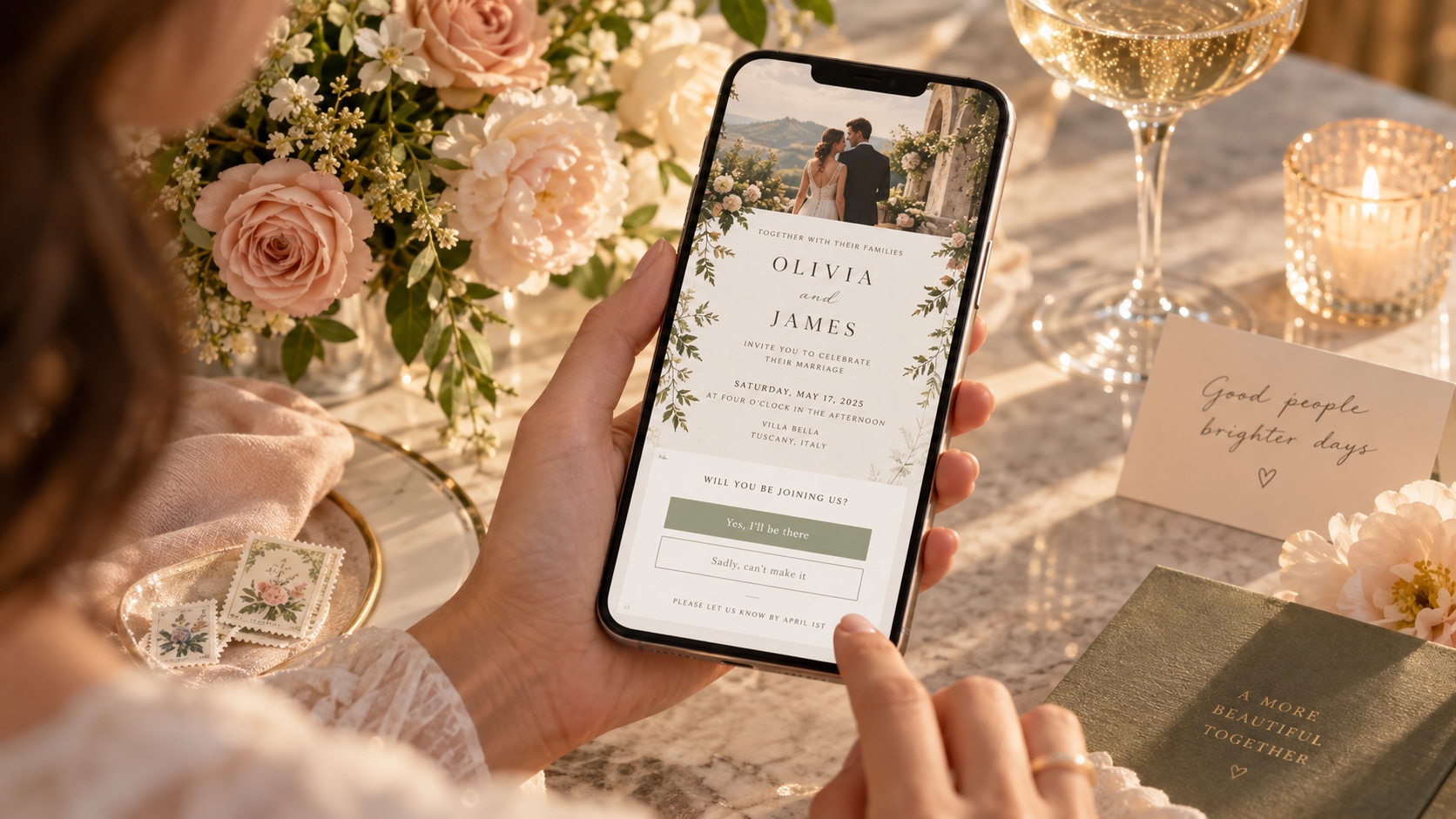
Digital Invitations Make the Guest Experience Easier
With a traditional invitation, guests often read the card and then respond somewhere else. They may need to mail a reply, visit a separate website, text the host, or remember to answer later. Every additional step makes a missed response more likely.
A digital invitation can keep the information and response flow together. Guests can open the invitation, view the date, time, and location, then submit their RSVP in the same experience. That can mean fewer follow-up messages, clearer guest counts, and a more organized planning process for weddings, birthdays, showers, dinners, and private parties. See how online invitations with RSVP work for a closer look.
Digital Invitations Can Feel More Expressive and Personal
A printed card can be beautifully personal, but it remains a static surface. A digital invitation can combine design, motion, pacing, photography, and sound to help guests feel the atmosphere before they arrive.
For a wedding, that might mean romantic visuals and a slow reveal. For a birthday, it might mean bright color, playful movement, and family photos. A personal voice message can make the invitation feel even closer to a direct welcome from the host. The format does not make an invitation meaningful on its own; the thoughtful choices within it do.
Digital Invitation Card vs. Paper Invitation: Side-by-Side Comparison
| Feature | Paper Invitation | Digital Invitation Card |
|---|---|---|
| Delivery | Physical mail or hand delivery | Link, text, email, or social sharing |
| Updates | Hard to revise after printing | Can be easier to update when details change |
| RSVP | Usually handled separately | Can connect directly to online RSVP |
| Visual style | Static, tactile, and print focused | Static, animated, or video based |
| Personalization | Paper, print details, design, and wording | Design, photos, video, motion, and personal audio |
| Guest convenience | Requires keeping the physical card | Easy to reopen on a phone |
| Speed | Requires production and delivery time | Can be shared immediately |
| Cost factors | Printing, envelopes, and postage | No physical printing or mailing costs |
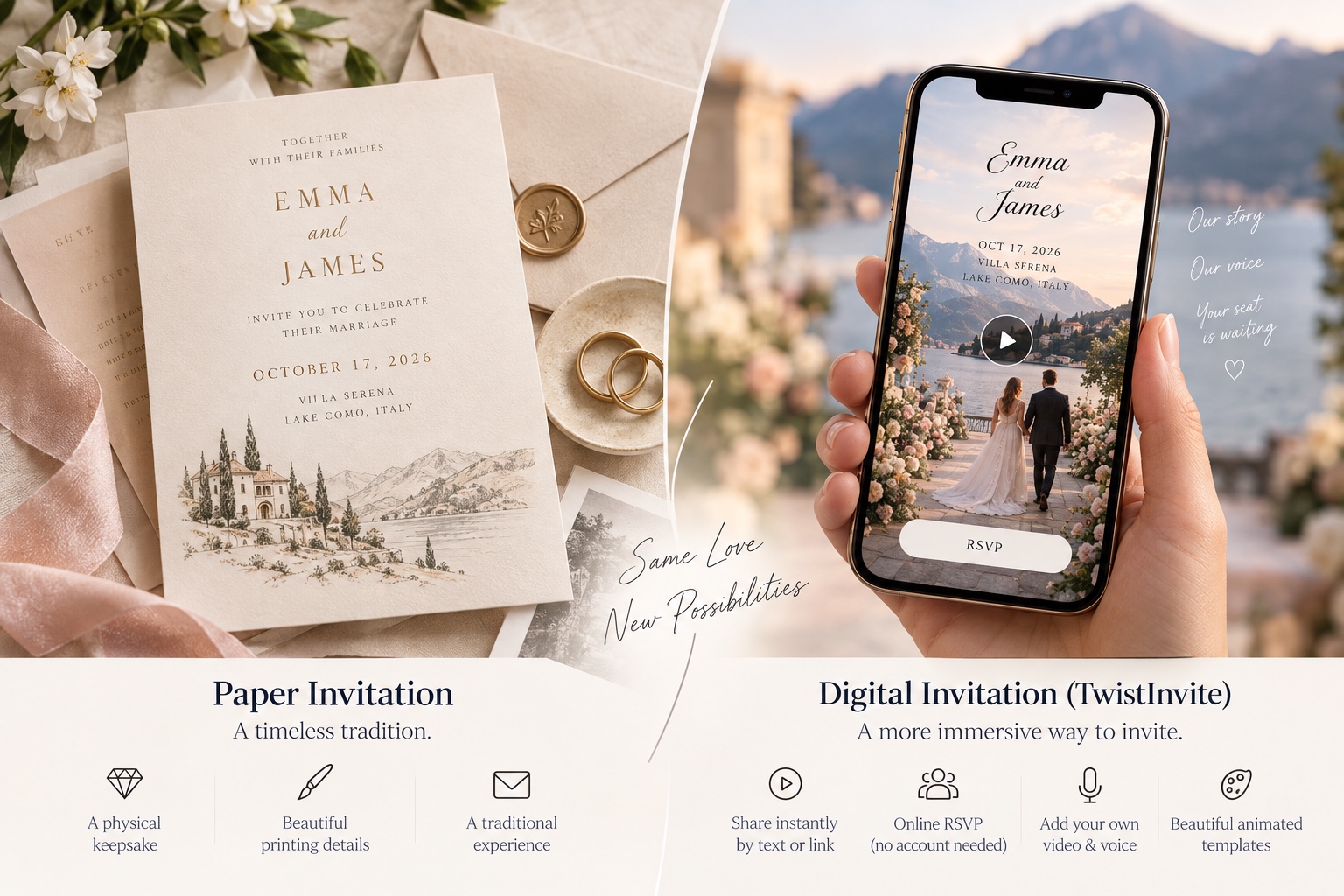
When Should You Choose Paper, and When Should You Choose Digital?
Choose paper when
Tradition and keepsake value lead
- Your event is highly formal or traditional.
- You want a physical object guests can keep.
- Specialty printing or stationery details matter to the design.
- Your guests strongly prefer printed mail.
Create it in the TwistInvite app
Download free on iPhone or Android, then share one link with your guests.
Choose digital when
Convenience and experience lead
- You want guests to receive the invitation instantly.
- You need a smoother RSVP process.
- You want to use motion, photos, video, or personal audio.
- Guests need to revisit details easily from a phone.
Digital does not have to feel less special. A refined design can feel warm, elegant, and deeply personal while still making the practical parts of event planning easier.
Can You Use Paper and Digital Invitations Together?
Yes. A hybrid approach can give you the best qualities of both formats. You might send printed invitations to close family while sharing a digital version with international guests, or use premium stationery for the formal announcement and collect responses through online RSVP.
The two formats do not need to compete. Paper can carry the ceremonial and keepsake value, while digital handles speed, updates, sharing, and guest responses.
What If You Want Something More Personal Than a Standard Card?
Sometimes the real goal is not simply choosing a delivery format. You want guests to feel something when the invitation opens. A custom digital invitation can use your own visuals, photos, video, wording, and personal audio to reflect the atmosphere of the event rather than relying on a generic announcement.
That flexibility is useful for hosts who care about mood and storytelling. Explore video invitations, refined wedding invitations, or creative birthday invitation ideas to see how different celebrations can shape the format.
Which Invitation Format Is Better for Your Event?
There is no universal winner. Paper is strongest when the stationery itself is part of the emotional or visual experience. A digital invitation card is strongest when convenience, guest response, flexible sharing, or visual storytelling matters more.
The best invitation fits the experience you want to create. If you want it to set the tone, help guests respond easily, and remain available whenever they need the details, digital is a strong choice. If you want a physical object that becomes part of the ceremony and the keepsakes, paper may deserve the lead.
Frequently Asked Questions
Is a digital invitation card better than a paper invitation?
A digital invitation card is often better if you want easier sharing, online RSVP, faster delivery, and a more convenient guest experience. A paper invitation may be better when a traditional physical keepsake is the priority.
Are digital invitations appropriate for weddings?
Yes. Digital invitations can work beautifully for weddings, especially when you want guests to view details, RSVP easily, and experience a more visual or emotional invitation style.
Can a digital invitation include RSVP?
Yes. A digital invitation can connect guests directly to an online RSVP flow, making responses easier for guests and simpler for hosts to organize.
Do digital invitations feel less personal?
Not necessarily. Digital invitations can feel highly personal when they include custom photos, motion, video, thoughtful wording, or audio you import or record.
When should I choose a paper invitation instead?
Paper may be the better choice when the event is highly traditional, you want a physical keepsake, specialty stationery is part of the design, or your guests strongly prefer printed mail.
Choose the Invitation That Creates the Right Beginning
A great invitation does more than tell people where to go. It gives them a feeling about what is coming. Choose the format that makes the event clear, beautiful, and easy to respond to while staying true to the experience you want guests to remember.
Explore the Video Invitation Maker, browse Wedding Invitations and Digital Birthday Invitations, or add an RSVP Website. TwistInvite is free to start.