
A dinner party invitation sets the evening before anyone sits down. Guests want to know whether they’re walking into an intimate table for six, a formal seated meal, or a casual supper with cocktails first—and your invite is how they find out. Get the tone right and the logistics clear, and half the hosting stress disappears before the grocery run.
This hub covers what to include on dinner party invitations, dress and menu cues, timing, RSVP details, and digital options that keep replies organized. For ready-to-adapt copy, see dinner party invitation wording. For visual layouts, browse dinner party invitation templates.
Kinds of Dinner Parties Your Invite Should Clarify
Intimate dinner. A small table, longer conversation, and often a plated or family-style meal. Plus-ones may or may not fit—say which so nobody assumes a seat that isn’t there. This format rewards a longer lead time on dietary asks: with six plates, one allergy surprise changes the whole menu.
Formal dinner. Clear seating time, dress cue, and a more polished visual. Guests should know if gifts, toasts, or a program are part of the night before they arrive empty-handed or overdressed. If you’re timing a surprise speech between courses, “please arrive by” language matters more than floral metaphors.
Casual dinner. Kitchen-island energy, flexible arrival, and simpler food notes. Language can be warmer and shorter without losing the essentials. Tradeoff: flexible arrival feels hospitable until the roast rests too long—add a soft “we’ll sit around 7:30” even on casual invites when timing matters.
Hosted table with cocktails first. Mention cocktail hour start vs. seating time so guests don’t arrive mid-toast or mid-course. That single line saves more evenings than any centerpiece. Guests who assume “7 PM dinner” means walk-in-at-7 will miss the mingling you planned—or interrupt plating.
Birthday dinner. Restaurant, private dining, or home celebration. Details and wording live on birthday dinner invitations.
Rehearsal dinner. Wedding-weekend evening with its own logistics. See rehearsal dinner invitations.
Supper club or shared menu night. When the meal is the event—chef’s table energy, tasting notes, or a themed menu—say enough that guests know it’s not a drop-in open house.
Morning and midday gatherings belong on the brunch invitation ideas and wording hub instead. Keep dinner and brunch intents cleanly separated so guests (and search) know which meal you mean.
What to Include on a Dinner Party Invitation
Dinner invites fail when guests have to guess. Put the answers up front and keep decoration from hiding the address.
- Host name(s) and contact
- Occasion (if any)—birthday, anniversary, just because
- Date, arrival time, and seating time if they differ
- Location with apartment, parking, or building notes
- Dress cue — cocktail, smart casual, black tie optional, come as you are
- Menu expectation — plated, family-style, tasting, potluck / shared dishes
- Plus-ones policy
- Dietary request line if you need it
- RSVP deadline and method
A one-line note like “Cocktails at 6:30, dinner at 7:15” prevents the classic early-or-late scramble. If guests should bring wine, dessert, or nothing at all, say so. Silence on bring-a-bottle culture creates awkward hallway moments with duplicate Cabernets and no salad.
Timing and Plus-Ones
For a home dinner among friends, ten days to two weeks is usually plenty. For formal dinners, restaurant buyouts, or guests who travel, send three to four weeks ahead. Private dining rooms often need a guaranteed count—build that deadline into the invite, not a last-minute text.
Plus-ones are a common friction point. If the table is fixed, “We have room for you—please RSVP for one” is kinder than silence. If partners are welcome, invite them by name when you can. Kids’ policies belong on the invite when the answer isn’t obvious from your usual circle.
Dress Cues and Menu Expectations
Dress language on dinner party invitations doesn’t need fashion-speak. Soft cues work:
- “Smart casual—jackets welcome, ties optional”
- “Dressy evening”
- “Come comfortable; we’re eating in the kitchen”
- “Cocktail attire”
Use the strongest cue when the venue could go either way—hotel restaurants, rooftop spaces, and “nice neighborhood place” nights are where guests guess wrong. Kitchen dinners can skip dress language if your circle already knows the vibe; mixed-generation tables usually can’t.
Menu notes help guests eat beforehand (or not). “Light bites and dessert” vs. “full plated dinner” changes how people plan their day. For potluck or shared-supper nights, list what’s covered and what’s open so the table stays balanced. If you care about punctual seating—soufflés, tasting menus, surprise speeches—say “please arrive by” rather than hoping people intuit it.
Design Directions for Dinner Invites
Evening invitations can lean warmer and deeper than brunch designs—candlelight, florals, vineyard tones, or clean modern type. Match the design to the room you’ll actually sit in.
- Elegant floral table — romantic without being wedding-coded
- Supper club / chef’s table — editorial, food-forward
- Mediterranean or vineyard — destination or wine-country mood
- Modern minimal — dark or cream grounds, strong typography
- Seasonal supper — herbs, soft color shifts by time of year
Explore layouts in dinner party invitation templates and phrasing in dinner party invitation wording.
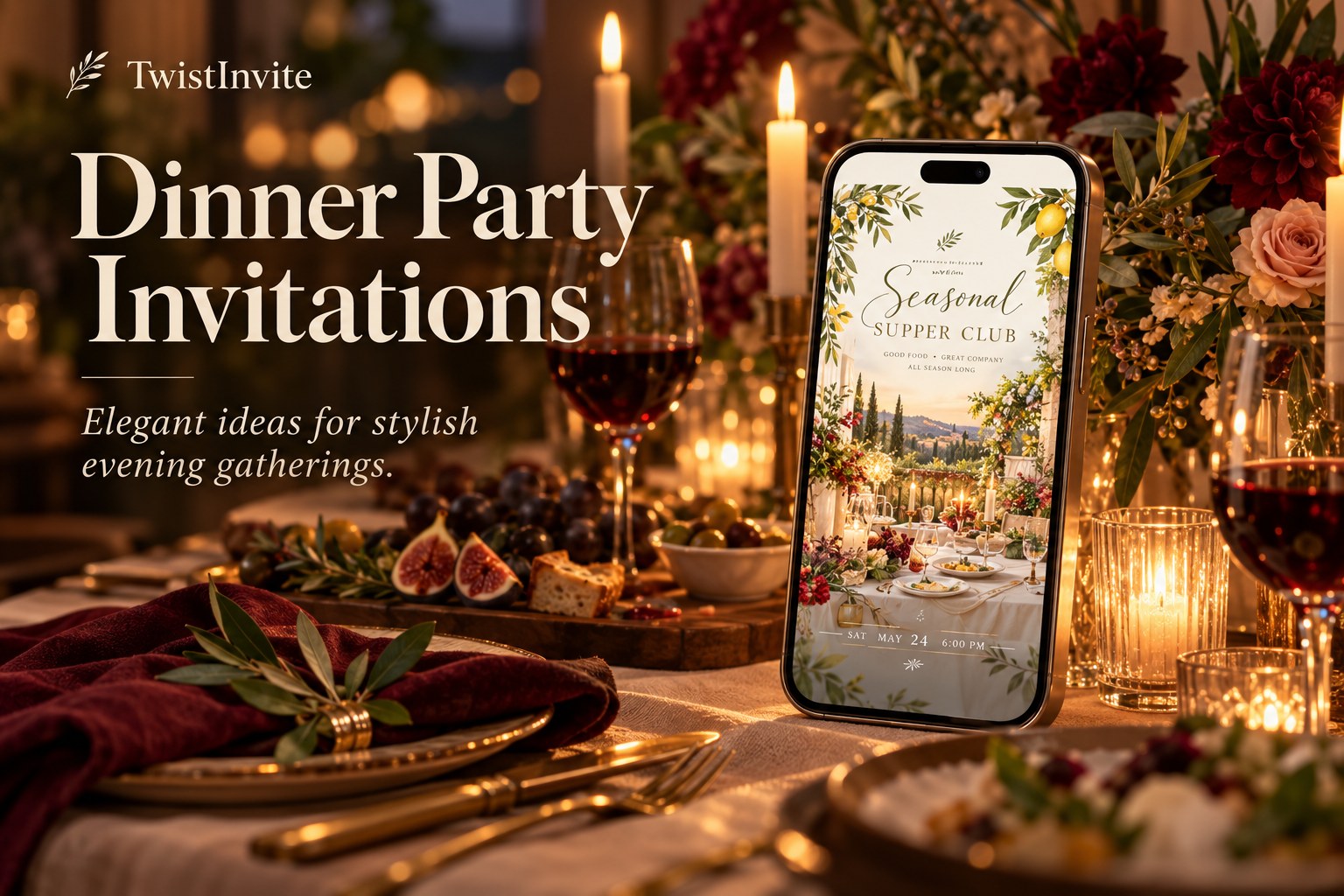
Featured TwistInvite DesignFlowers & Supper BrunchAn elegant floral table visual that reads as a beautiful seated evening—a natural fit for a seated dinner party. Soft blooms and a dressed table signal care without formality for formality’s sake.Explore InvitationsDigital Dinner Party Invitations and RSVPs
Digital dinner invites travel well when guests confirm from work, the car, or another city—especially when you’re locking a private-room minimum or a butcher’s order by Thursday. TwistInvite is mobile-first: pick a design from our dinner party invitation maker, personalize it, drop in a photo of the table or a 15-second “come hungry” note where supported, and share by text or link. Guests RSVP Going, Can’t make it, or Maybe without creating an account.
That matters for dinner parties because headcount drives shopping lists, seating charts, and restaurant guarantees. Centralized RSVPs beat a trail of emoji reactions in three different apps—and they leave a record when someone later asks, “Wait, did I say yes?” Learn the flow in online invitations with RSVP or build a video-forward invite with the video invitation maker. For a step-by-step, see how to make a video invitation. Free plan: $0, 3 events per month, 15-second video messages, free templates, RSVP tracking.
Hosting Details Guests Quietly Appreciate
Parking notes, buzzer codes, and “shoes off at the door” lines feel small until someone is circling the block in the rain with a bottle of wine and no free hands. Asking about allergies ahead of time prevents mid-course surprises—especially when you’re cooking one shared braise rather than a choose-your-own menu. If dinner runs long and neighbors are close, a soft end-time cue helps guests plan rideshares without reading the room awkwardly at 10:40.
For potluck dinners, assign categories on the invite or in a shared reply thread so you aren’t improvising a second starch at 6:45. If the building elevator is unreliable, say so; guests carrying a warm casserole deserve that honesty before they commit to six flights of stairs.
Frequently Asked Questions
When should I send dinner party invitations? Friends’ home dinners: about ten days to two weeks. Formal, restaurant, or travel-heavy dinners: three to four weeks.
Should I list both cocktail and seating times? Yes, whenever they differ. Guests otherwise guess—and guessing creates early arrivals into unfinished prep or late arrivals into the first course.
How do I handle plus-ones? State the policy. Invite partners by name when welcome; say the table is set for listed guests when it isn’t.
Do I need a dress code? Include one when the venue or formality isn’t obvious. Soft, plain language beats vague “nice clothes.”
Can digital dinner invites track RSVPs? Yes. With TwistInvite, guests reply Going / Can’t make it / Maybe without creating an account, and hosts see replies in one place. An RSVP website style link keeps details and responses together.
From Invite to Evening
Once replies land, finalize seating, dietary swaps, and timing. Send a short reminder only if details change—new address, weather backup, or a shifted seating time.
Choose the dinner tone that matches your table, put the logistics where guests can’t miss them, and send the invitation while you still have time to enjoy cooking (or ordering) the meal.
Create it in the TwistInvite app
Download free on iPhone or Android, then share one link with your guests.