
If you are considering digital wedding invitations, the question is rarely just, “Can I send them online?” It is usually more personal: Will this feel like enough for a wedding? Will guests think it is too casual? Will older relatives prefer paper?
For many weddings, digital invitations are completely appropriate. What matters more than the format is whether the invitation feels intentional, fits the tone of your wedding, gives guests the information they need, and makes them feel genuinely invited. A rushed digital invite can feel casual, but so can a rushed paper one. A thoughtful digital invitation can feel elegant, personal, and every bit as considered as printed stationery.
Quick Answer: Are Digital Wedding Invitations Acceptable?
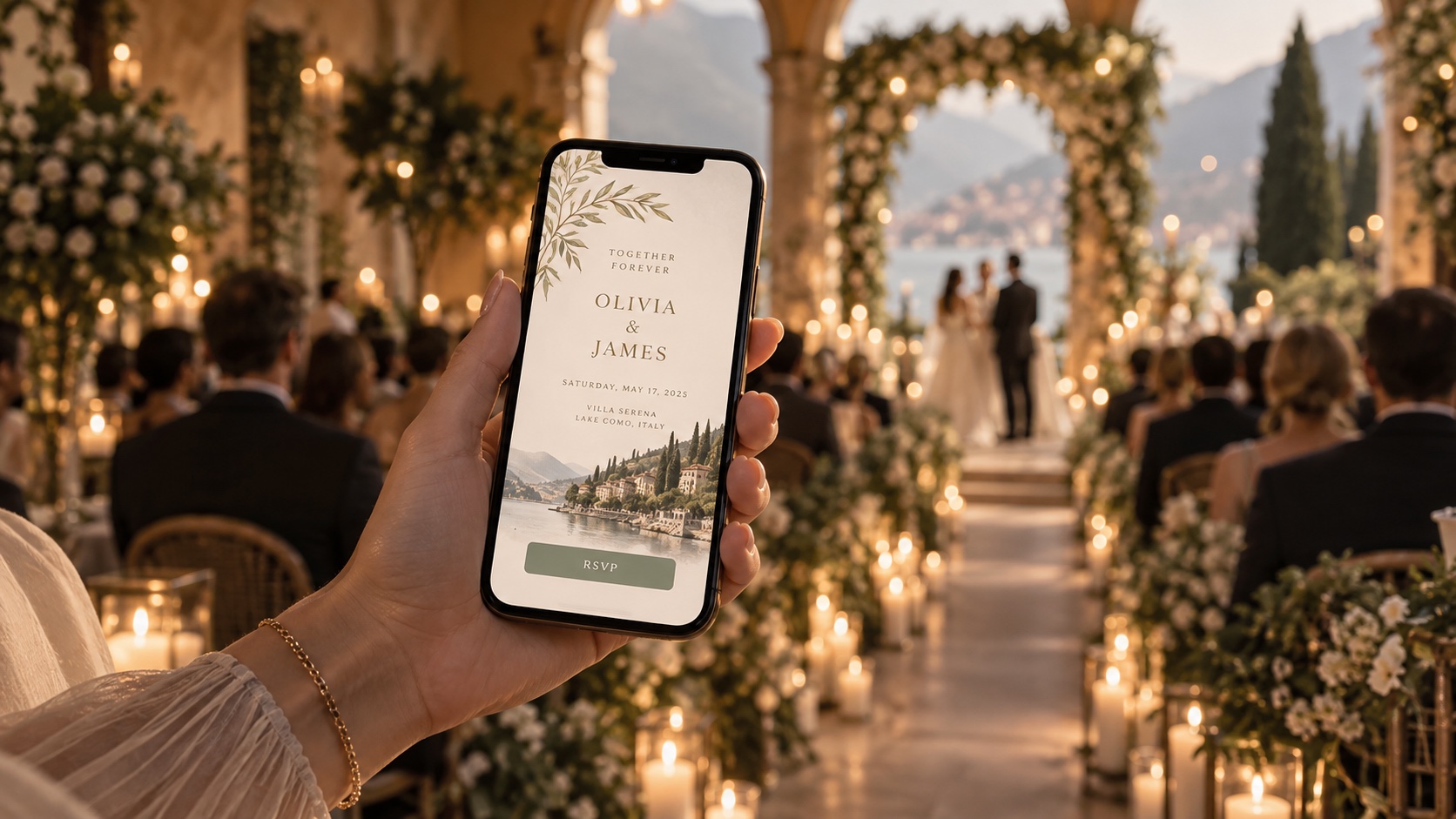
Yes. Digital wedding invitations are appropriate when they reflect the tone of the celebration, communicate the details clearly, and make responding easy for guests. The invitation does not become less thoughtful simply because it arrives through a phone instead of an envelope.
Paper may still be the better choice for highly traditional guests or when printed stationery is an important emotional part of the wedding. Many couples also choose a hybrid approach, using digital invitations for most guests and printing a smaller number for people who would especially value a physical keepsake.
What Do Guests Actually Care About?
Most guests are not judging an invitation by whether it came with a stamp. They are trying to understand three things: what the celebration will feel like, what they need to know, and what they should do next. A good invitation answers all three without making them search.
The design should match the wedding, the wedding invitation wording should sound like you, and the practical details should be easy to find. When guests can immediately understand the date, time, location, and RSVP action, the whole experience feels more polished.
What Makes a Digital Wedding Invitation Feel Thoughtful?
Thoughtfulness is not only about appearance. It also means respecting your guests' time and making the experience easy to understand. A carefully designed invitation with clear hierarchy, readable details, warm wording, and an obvious next step will usually feel more considerate than an ornate invitation that leaves guests confused.
Digital invitations can make the practical side easier because the invitation and response can work together. With TwistInvite, guests can open the invitation, choose Going, Can’t make it, or Maybe, and complete the RSVP form without creating an account. That simplicity is part of being a considerate host too.
When Do Digital Wedding Invitations Make the Most Sense?
Digital invitations are especially useful when your guest list is spread across different cities or countries, when most people already communicate with you through their phones, or when you want the invitation and online RSVP to work together instead of becoming two separate systems.
They can also be a better fit when your wedding has a strong visual or personal story. An engagement film, proposal footage, custom animation, or meaningful photographs can become the first thing guests experience rather than something you send separately or save entirely for the reception.
Can a Digital Invitation Feel More Personal, Not Less?
Yes. The format gives you room to use material that genuinely came from your relationship. With TwistInvite Custom, you can use your own media in the invitation and add audio, including a short recorded voice message. Hearing you say, “We really hope you can celebrate with us,” can feel more personal than another paragraph of formal wording.
This changes the role of the invitation. It is no longer only a piece of information about the wedding; it can become the first small piece of the wedding itself. Our guide to creating and sending digital wedding invitations explains how the invitation, personal media, and RSVP can work together.
Are Digital Invitations Too Casual for a Formal Wedding?
Not necessarily. A formal wedding can have a digital invitation that feels restrained, elegant, and ceremonial. The difference comes from the design language: typography, pacing, imagery, wording, animation, and how much visual noise you allow.
A black-tie wedding probably should not use the same invitation style as a playful backyard party, but that would be true with paper too. “Digital” is not a style; it is a format. A digital invitation can be editorial, cinematic, romantic, minimal, playful, formal, or highly personal depending on how it is designed.
Is It Rude to Send a Wedding Invitation by Text?
Not when texting is already a natural way you communicate with that guest. The way you introduce the link matters, though. Sending a link with no context can feel abrupt, while a short message such as, “We’d love for you to celebrate with us—here’s our wedding invitation,” immediately feels warmer.
The technology is the same, but the experience is different. A personal introduction tells the guest that the invitation was sent intentionally rather than dropped into a conversation without thought.
What Do Paper Invitations Still Do Better?
Paper still has qualities digital cannot replace. Opening an envelope can feel ceremonial, and printed stationery can become part of a wedding album or keepsake box. If beautiful paper, calligraphy, letterpress, or a coordinated stationery suite is central to how you imagine your wedding, that has real value.
Choosing digital does not mean pretending those things do not matter. The useful question is which qualities matter most to you and your guests. For a full practical comparison, read Digital Invitation Card vs. Paper Invitation.
Can You Use Digital and Paper Invitations Together?
Absolutely. For some couples, the best answer is a mix of both. You might send digital invitations to most guests while printing a smaller number for close family members, older relatives, or anyone who would especially appreciate a physical invitation.
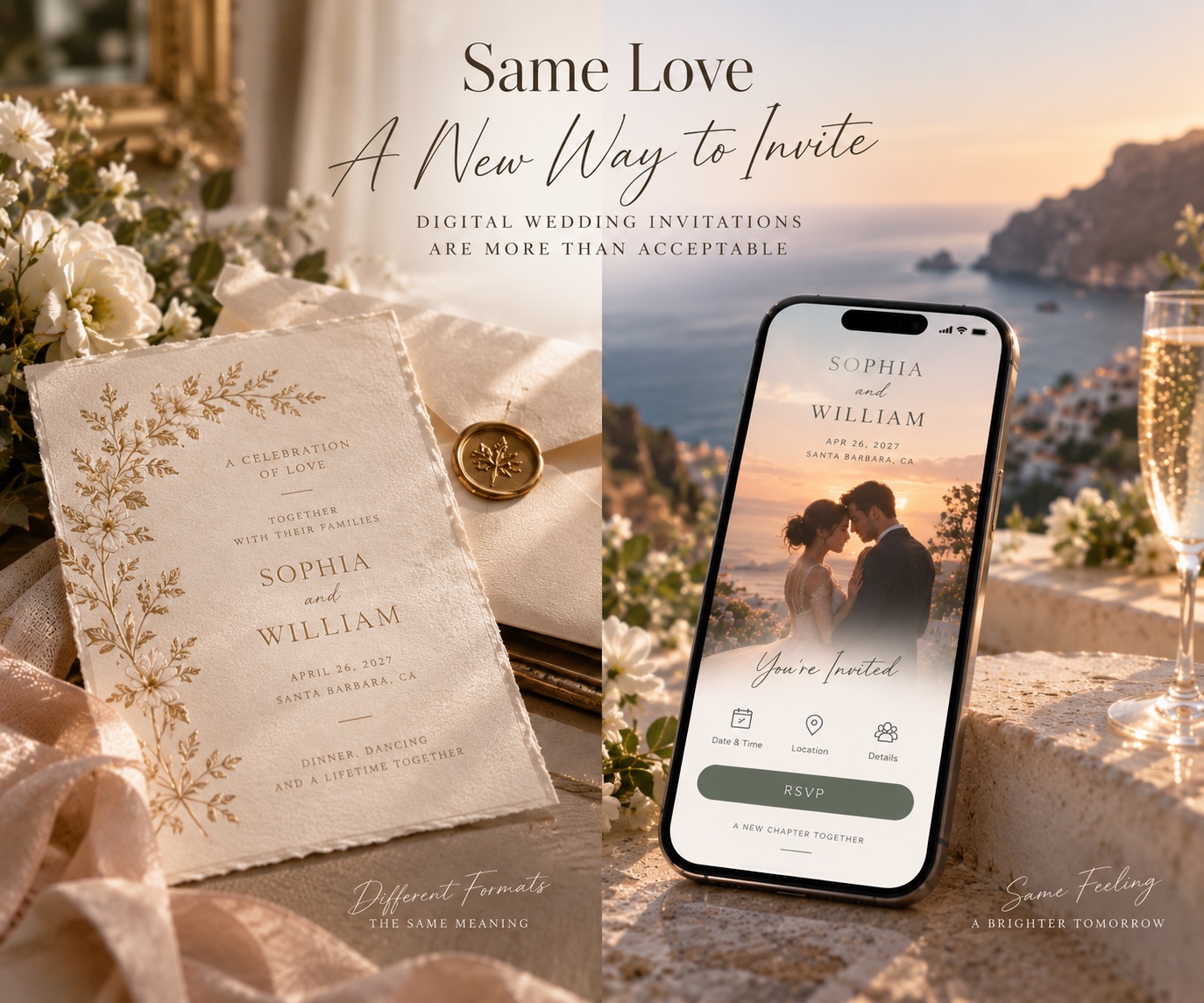
That is not inconsistent; it is simply using each format where it works best. Paper can carry the physical ritual and keepsake value, while digital can carry video, audio, easy sharing, and RSVP.
How Do You Decide What Is Right for Your Wedding?
Think about the wedding and the people receiving the invitation rather than trying to prove that one format is always better. A digital invitation may make sense when most guests are comfortable receiving links, online RSVP would simplify planning, or you want to include personal media. Paper may matter more when stationery is part of the ceremony or certain guests would value a physical keepsake.
- Does the invitation style match the tone of the wedding?
- Can guests quickly find the date, time, location, and RSVP?
- Will most guests feel comfortable opening the invitation online?
- Would a few people appreciate or need a printed version?
- Does video, audio, or personal media add something meaningful?
You do not have to choose a format based on what every other couple is doing. Choose the one—or the combination—that makes the invitation feel like the right beginning for your wedding.
Frequently Asked Questions
Are digital wedding invitations tacky?
Not inherently. A poorly designed or impersonal invitation can feel casual in any format. A polished digital invitation with thoughtful wording, clear information, and a design that matches the wedding can feel elegant and intentional.
Is it rude to send wedding invitations by text?
Not necessarily. If texting is already how you communicate with someone, sending the invitation that way can feel natural. A short personal message before the link usually makes the experience warmer.
Can digital wedding invitations be formal?
Yes. A digital invitation can use formal wording, elegant typography, refined visuals, and restrained motion that suit a formal wedding.
Can I send digital invitations to some guests and paper invitations to others?
You can. Some couples use digital invitations for most guests and print a smaller number for close family members, older relatives, or anyone who would value a physical keepsake.
Will older guests prefer paper wedding invitations?
Some may, while others are comfortable opening a link on their phone. Consider the preferences of the people you are inviting and use paper for individual guests when it would make the experience easier or more meaningful.
Do guests need an account to RSVP to a TwistInvite invitation?
No. Guests can open a TwistInvite invitation and submit their RSVP without creating an account.
Choose the Invitation That Feels Like You
The best wedding invitations do more than deliver information; they make guests feel like the celebration has already started. Sometimes that happens through beautiful paper and an envelope. Sometimes it happens through a video, a voice message, or a digital invitation that lets guests respond immediately. What matters is not whether the invitation is paper or digital, but whether it feels like you.
Explore TwistInvite Wedding Invitations or read how to create, send, and collect RSVP with a digital wedding invitation.
Create it in the TwistInvite app
Download free on iPhone or Android, then share one link with your guests.