
Introduction
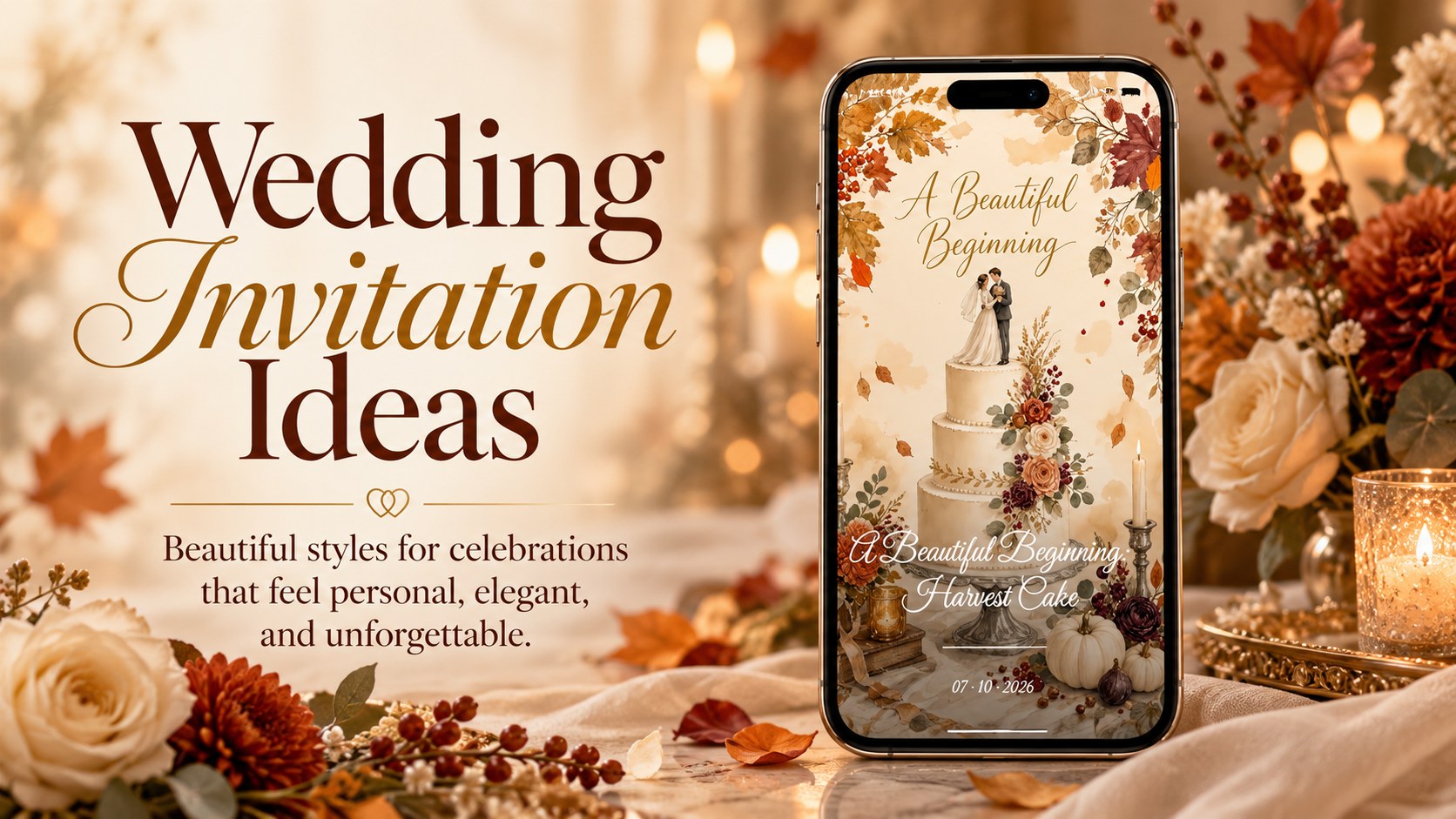
Wedding invitation ideas are everywhere. Pinterest, Instagram, stationery shops, wedding websites, and template libraries can give you hundreds in a single evening. You can also start from one of our wedding invitations and send it as a single link.
The difficult part is not collecting inspiration. It is deciding which ideas actually belong together.
A memorable invitation usually has one clear point of view. It might introduce the venue, tell part of the couple’s story, build around a beautiful season, or create a dramatic digital reveal. The strongest designs do not try to combine every trend at once.
For 2026 weddings, personalization is particularly visible. Current invitation trends include venue illustrations, hand-drawn watercolor, bold color, conversational wording, textured and editorial design, and deeply personal details connected to the couple rather than generic wedding symbolism.
Here are fifteen ways to turn those ideas into an invitation that feels specific to your celebration.
Featured TwistInvite DesignGarden of DevotionA beautiful invitation direction that pairs with wedding invitation ideas for 2026 celebrations.Explore Invitations1. Turn Your Venue Into the Invitation
If the venue is one of the reasons you fell in love with the wedding plan, let guests see it early.
A watercolor estate, line-drawn chapel, mountain lodge, city skyline, or garden entrance can become the main artwork.
This works especially well when the place has a recognizable silhouette or emotional meaning.
The invitation becomes more than decoration. It gives guests their first glimpse of where the day will happen.
2. Use Your Wedding Season as a Mood, Not a Motif
Seasonal invitations can be subtle.
A fall wedding does not need twenty maple leaves. Amber light, dried flowers, cream paper, and rust-colored typography may communicate autumn more beautifully.
Winter can appear through cool light, snow, bare branches, deep navy, or candlelit architecture.
Spring can feel botanical and fresh without covering the design in pastel blossoms.
The goal is atmosphere rather than literal illustration.
3. Let One Flower Define the Design
Instead of a generic floral border, choose a flower connected to your bouquet, venue, proposal, or family.
A single rose variety, wildflower, peony, magnolia, or native botanical can become a visual thread across the entire wedding.
This is one reason illustrated botanical details continue to feel personal: they can carry meaning without requiring a complicated layout.
4. Build the Invitation Around a Place You Love
The invitation does not have to show the wedding venue itself.
It could reference:
- the city where you met
- a favorite coastline
- a neighborhood
- a mountain landscape
- a travel destination
- a garden
- a street or café
Place-based design gives the invitation a story before guests even read the names.
5. Use a Photograph Without Making It Look Like a Save-the-Date
Photo invitations often become visually casual because the photograph dominates everything.
A more editorial approach is to crop the image deliberately, use typography around it rather than over it, or treat the photo as one part of the composition.
Black-and-white portraits can feel especially sophisticated when paired with restrained type.
6. Try Bold Color Instead of Wedding Neutrals
Cream, blush, and gold are not the only wedding colors.
Deep red, cobalt, plum, olive, citrus, terracotta, or strong blue can make an invitation far more memorable.
Bold color has become a visible part of 2026 wedding stationery trends as couples move away from one universal neutral palette.
The trick is to use a controlled palette rather than every color you love at once.
7. Make Typography the Main Visual
You do not need illustration at all.
A beautifully set couple’s name, oversized date, or dramatic serif headline can carry the whole invitation.
This works especially well for modern weddings, city venues, galleries, restaurants, and black-tie events.
Typography-led invitations also adapt well to digital formats because the hierarchy stays clear on smaller screens.
8. Use Handwritten Details
Handwritten text can make an invitation feel more intimate.
That does not mean writing the whole card in difficult-to-read script.
Use handwriting for:
- names
- a short phrase
- a signature
- a meaningful line
- a small note
Then keep the practical information in a more readable typeface.
Handwritten watercolor and conversational copy are both among the notable invitation directions highlighted for 2026.
9. Open With a Moment From Your Story
Digital invitations create room for something paper cannot easily do: a beginning.
Instead of immediately showing the event card, open with a short moment.
It could be:
- a proposal clip
- a childhood photograph
- your venue at sunset
- hands holding
- an animated envelope
- a handwritten line appearing on screen
Current digital invitation inspiration increasingly treats the first few seconds as part of the storytelling experience rather than simply a title screen.
10. Create a Cinematic Video Invitation
A wedding invitation can feel almost like a short trailer.
A snowy road leading to a chapel, a garden appearing through mist, a ballroom lighting up, or a couple walking through autumn trees can create atmosphere before the event details arrive.
A video wedding invitation is most effective when the motion serves one clear idea rather than trying to show the entire relationship in fifteen seconds.
11. Animate One Element
You do not need a fully cinematic invitation.
A single animated element can be enough:
- flowers opening
- a wax seal breaking
- curtains moving aside
- snow falling
- candlelight flickering
- text slowly revealing
This makes an invitation feel alive without turning it into a complicated sequence.
12. Build Around a Shared Interest
Music, books, architecture, travel, art, food, or film can inspire the invitation without turning the wedding into a costume theme.
A couple who loves vinyl might use record-inspired typography. Travelers might use illustrated landscapes rather than passport clichés. Book lovers might use editorial page design instead of literally making the invitation look like a novel.
The best references are recognizable to the couple without becoming a gimmick.
13. Use Personal Wording Instead of Traditional Formality
Invitation wording can sound like the people getting married. For full formal, modern, and casual samples, see these wedding invitation wording examples.
Instead of:
The honor of your presence is requested…
a relaxed celebration might simply say:
We’re getting married, and we’d love you there.
Conversational wording is increasingly visible in current wedding invitation design because the invitation itself is becoming more personal.
The tone should still match the event, but formal wording is no longer the only legitimate choice.
14. Let the Invitation Preview the Guest Experience
If guests will arrive through a flower-covered arch, show that.
If the reception is built around candlelight, let the invitation glow.
If the ceremony is outdoors in winter, show the snow and quiet landscape.
This creates continuity between the invitation and the actual event.
Hospitality-inspired design is becoming more prominent for exactly this reason: couples are thinking about stationery as part of the whole guest experience rather than a separate purchase.
15. Mix Digital and Physical Instead of Choosing One
You do not have to decide between “paper wedding” and “digital wedding.”
Some couples use a digital save-the-date, printed formal invitation, online RSVP, and video reminder closer to the date.
Others use a beautiful digital invitation for most guests and printed versions for a smaller group.
Hybrid invitation systems are increasingly common because different pieces solve different problems.
The best combination is the one that matches your guests, budget, timing, and wedding style.
How to Choose Between All These Wedding Invitation Ideas
Do not start by asking which idea is the prettiest.
Ask:
What should guests understand about our wedding before they arrive?
If the answer is “the place matters,” begin with the venue.
If it is “the atmosphere is romantic and intimate,” begin with lighting, color, and florals.
If the answer is “this wedding feels like our story,” begin with personal media or imagery.
If the wedding is lively and modern, animation or bold color may communicate that more naturally than traditional stationery.
The invitation becomes easier to design once the wedding itself has something clear to say.
Conclusion
The best wedding invitation ideas do not come from combining the most trends. They come from choosing one or two ideas that belong to the couple and building around them.
A venue illustration, seasonal palette, meaningful flower, bold typography, personal photograph, animated opening, or short video can all become the starting point.
What matters is that the invitation feels connected to the celebration rather than simply fashionable in isolation.
Guests will see hundreds of wedding images online. The one they remember is the one that feels like it could only belong to you.
Create it in the TwistInvite app
Download free on iPhone or Android, then share one link with your guests.