
Introduction
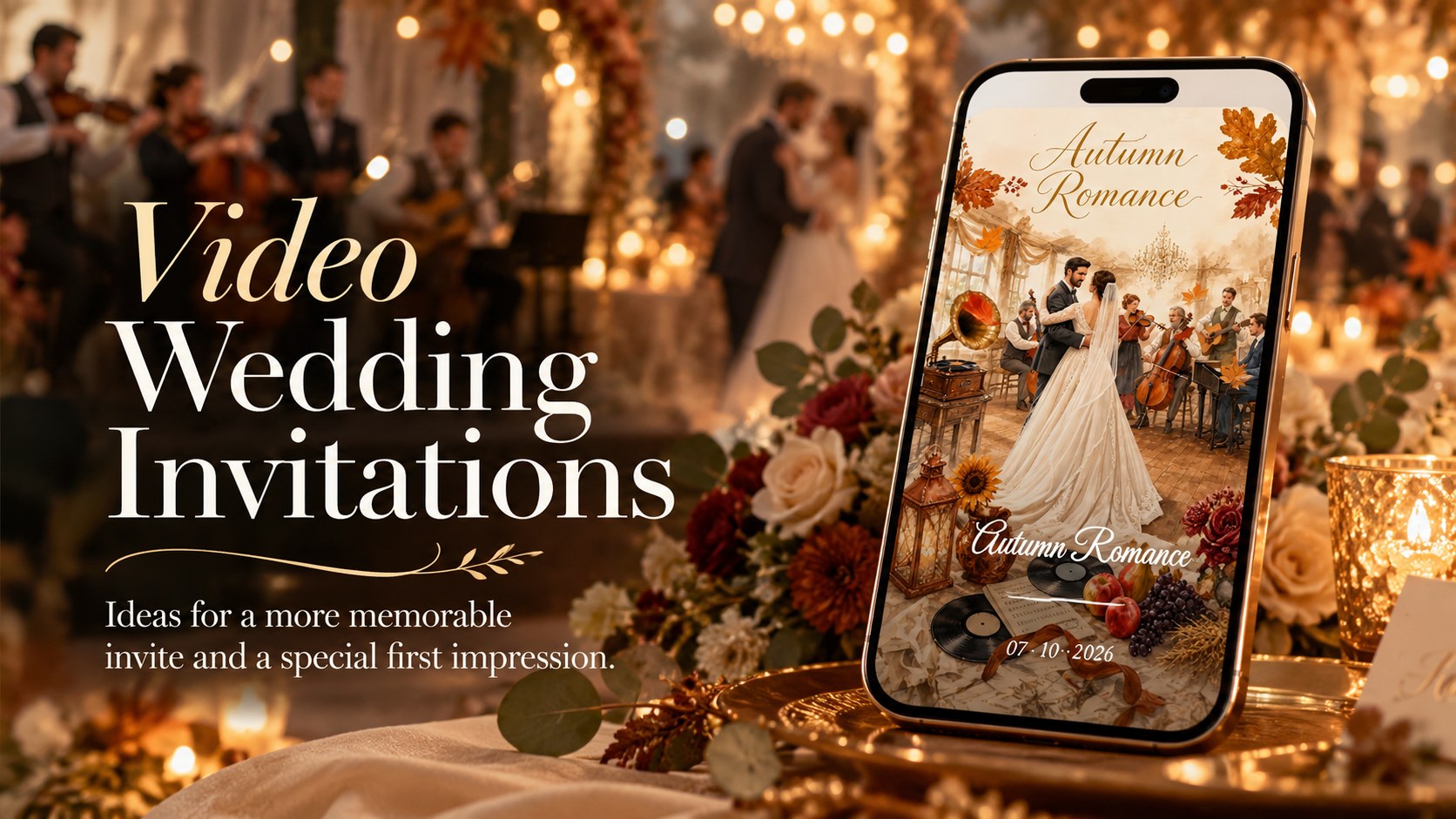
A video wedding invitation can do something a printed card cannot: it can create a beginning. You can also start from one of our wedding invitations and send it as a single link.
A scene appears. Music starts. A venue comes into view. A photograph moves across the screen. The couple’s names are revealed. For a few seconds, guests are not simply reading information. They are entering the atmosphere of the wedding.
That is why video invitations can be memorable.
It is also why they can go wrong.
A video that runs too long, hides the wedding details, uses too many transitions, or tries to tell the couple’s entire relationship story may feel more like a montage than an invitation.
The best video wedding invitations use motion with discipline. They create emotion first, then make the practical information clear.
Featured TwistInvite DesignGarden of DevotionA cinematic invitation direction for video wedding invitations that feel like the start of the celebration.Explore InvitationsWhat Is a Video Wedding Invitation?
A video wedding invitation uses moving imagery, animation, photographs, footage, typography, and sometimes audio to communicate the wedding invitation.
It might be:
- a short cinematic scene
- an animated design
- a photo-based story
- a couple video
- a venue reveal
- a stylized motion graphic
- a combination of video opening and static final card
The distinction between video, animation, and interactive digital invitations has become broader as wedding invitation formats evolve. Current 2026 content distinguishes between simple exported videos, animated invite experiences, and more complete mobile invitation pages with RSVP and other guest information.
For most couples, the technical label matters less than the experience.
Does it feel good to open? Can guests understand it? Can they find the details again?
Those are the better questions.
Start With One Strong Visual Story
A video invitation needs a concept.
Without one, it often becomes a sequence of unrelated effects.
For a winter wedding, the concept might be:
A quiet snowy road leads toward a warm chapel.
For an autumn wedding:
A couple moves through golden trees before the date appears.
For a garden wedding:
Flowers slowly open around an archway.
For an elegant ballroom wedding:
The room begins dark, chandeliers light up, and the invitation appears.
Each concept gives the motion a reason.
The video is not moving because video can move. It is moving because movement introduces the world of the wedding.
How Long Should a Video Wedding Invitation Be?
Shorter is usually stronger.
Guests do not need to watch a two-minute film before discovering the date.
A concise invitation can establish the atmosphere, reveal the couple’s names, and arrive at the event information quickly.
On TwistInvite’s free plan, video messages run up to 15 seconds, which naturally encourages this kind of restraint.
The first few seconds should create interest. The final portion should give the information enough time to be read.
Do not make guests replay the invitation three times to find the venue.
What Information Should Appear in the Video?
A video invitation still needs the same essential information as any other wedding invitation.
Include:
- couple’s names
- wedding date
- time
- venue
- location
- RSVP direction
Not every piece of information needs to animate.
In fact, the most important details are often better on a stable final frame.
A useful structure is:
Opening atmosphere → names / wedding reveal → final information frame
That separation keeps the invitation emotional without sacrificing usability.
Using Photos Without Making It Feel Like a Slideshow
Photos can make a video invitation deeply personal, but quantity matters.
Five or ten engagement photos shown one after another often feel like a slideshow.
One or two carefully chosen images can feel cinematic.
Try using:
- one strong portrait
- a childhood pairing
- a proposal moment
- hands or small details
- a venue photograph
- a candid image
You can also animate the photograph subtly rather than switching between many images.
The photo should support the story the invitation is telling.
How to Use Music in a Wedding Invitation
Music changes the emotional tone immediately.
A wedding invitation with soft piano feels different from one with orchestral strings, jazz, folk, or an upbeat modern track.
Choose audio based on the wedding rather than because the song happens to be popular.
The beginning of the track matters too.
A beautiful song with a long silent or slow introduction may not work inside a short invitation.
With TwistInvite, couples can incorporate imported audio into their invitation, which makes it possible to connect the visual experience to music that fits the event.
The sound should complement the invitation rather than becoming the entire experience.
Animated vs Cinematic vs Personal Video Invitations
Not every couple needs the same format.
Animated invitation
Best when the visual design itself is the star.
Flowers, text, lights, snow, illustrations, or architectural details can move without requiring footage of the couple.
Cinematic invitation
Best when atmosphere matters.
Landscapes, venues, lighting, camera movement, and visual transitions can create something closer to a short film.
Personal video invitation
Best when the couple wants to be directly present.
A greeting, short clip, proposal footage, or candid moment can make the invitation feel intimate.
The formats can also be combined.
An animated opening can lead into a personal clip and then settle on a clean final card.
Common Video Wedding Invitation Mistakes
The most common problem is trying to make every second impressive.
Constant motion becomes tiring.
Another mistake is using text that disappears too quickly.
Do not animate the date for half a second and assume guests saw it.
Avoid:
- too many font styles
- rapid transitions
- unnecessary visual effects
- long blank openings
- repeated information
- text overlapping moving backgrounds
- important details shown only once during motion
The invitation should have rhythm.
Something happens. Then the eye gets time to rest.
Video Invitations and RSVP
A video alone can create a beautiful first impression, but the guest still needs somewhere to respond.
That is why video works particularly well when it sits inside a broader digital invitation experience.
With TwistInvite, the invitation can combine video with a mobile-first guest experience and RSVP options for Going, Maybe, and Can’t make it without requiring guests to create an account.
The creative and practical layers therefore stay connected.
Guests can enjoy the invitation as an experience and still use it later as event information.
Conclusion
Video wedding invitations work best when they feel like the opening scene of the wedding rather than a demonstration of editing effects.
Choose one visual idea, keep the story concise, use music deliberately, and give the important information time to settle.
Personal photographs, venue footage, animation, seasonal landscapes, and cinematic movement can all make the invitation memorable. None of them matter if guests cannot find the date.
The best video invitation leaves guests with two thoughts at once:
This feels beautiful.
And:
I know exactly where I need to be.
Create it in the TwistInvite app
Download free on iPhone or Android, then share one link with your guests.