
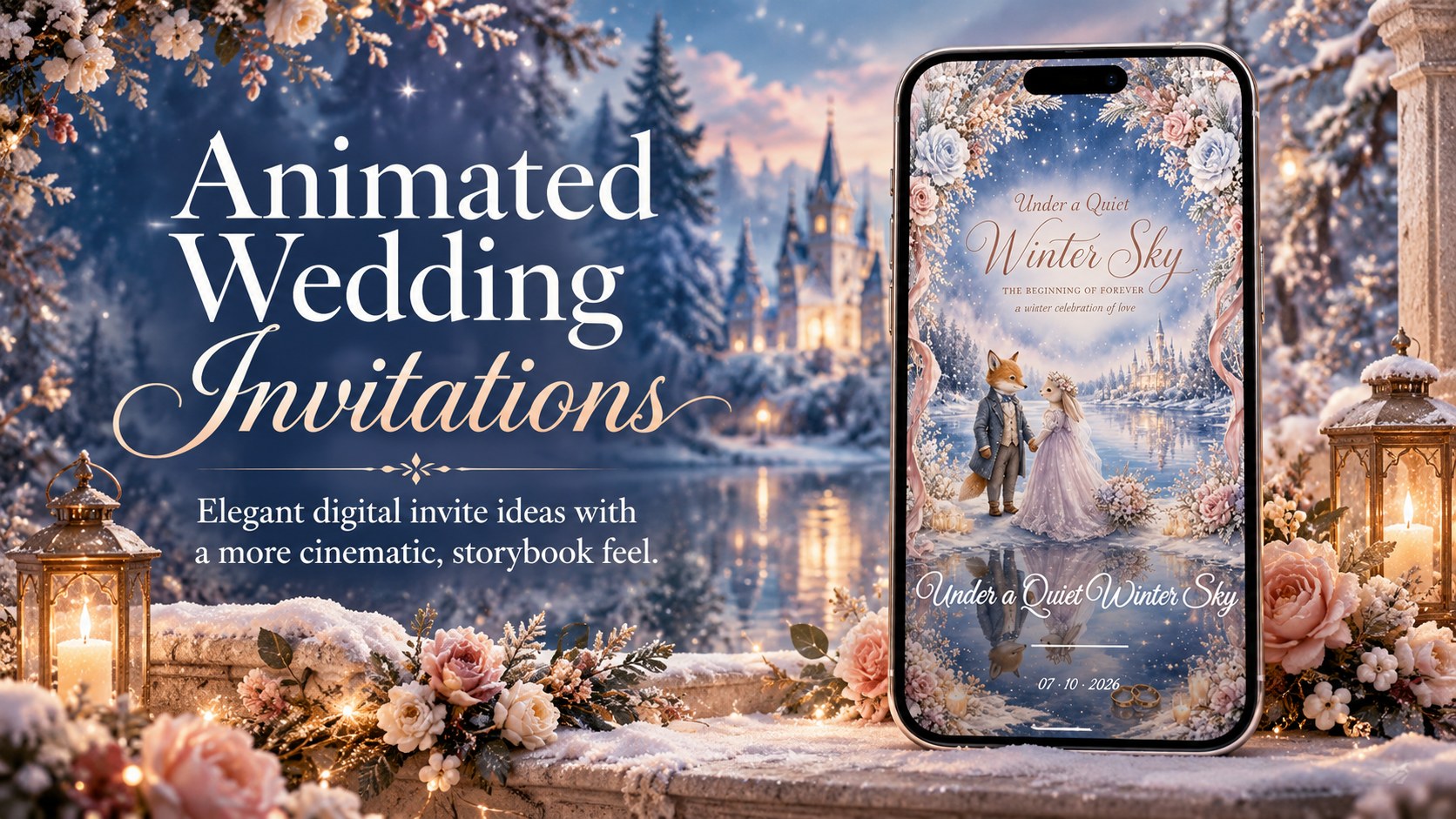
Introduction
Animated wedding invitations sit somewhere between traditional stationery and short-form storytelling. You can also start from one of our wedding invitations and send it as a single link.
Instead of presenting every detail in one static frame, they can reveal the invitation gradually: flowers open, a venue lights up, snow begins to fall, typography appears, music starts, or a monogram resolves into the couple’s names. The movement gives the invitation a sense of arrival.
That is also where animated invitations can go wrong. Motion can make a design feel special, but too much movement can make the wedding details harder to understand. A beautiful animation is not useful if guests have to replay it several times to find the date.
The best animated wedding invitations treat movement as part of the design system rather than decoration layered on afterward. They create atmosphere first and then settle into clear, readable information.
Featured TwistInvite DesignGarden of DevotionA motion-forward invitation look for animated wedding invitations that bring the celebration to life.Explore InvitationsWhat Is an Animated Wedding Invitation?
An animated wedding invitation is a digital invitation that uses motion instead of presenting only a static card.
That motion may include:
- animated typography
- moving floral or botanical elements
- illustrated scenes
- venue reveals
- falling snow or floating particles
- moving photographs
- cinematic transitions
- music or subtle audio
- video clips
- interactive RSVP elements
Current 2026 invitation coverage commonly separates animated invitations into several broad styles: cinematic video, motion-graphic invitation, interactive invitation page, and social-style mobile reveal.
The most important distinction is not technical. It is how the guest experiences the invitation.
A full cinematic invitation may feel like a short film. A motion-graphic design may keep the look closer to traditional stationery while adding elegant movement. A mobile invitation experience may combine animation with event details and RSVP.
Animated Wedding Invitation Ideas That Actually Use Motion Well
The strongest animated invitations usually have one central movement idea.
Floral reveal
Flowers or vines grow gradually around the couple’s names before settling into a final frame. This works particularly well for garden, romantic, and spring weddings.
Venue reveal
A building, chapel, estate, or landscape begins in darkness or mist and slowly comes into view. This is useful when the location is a major part of the wedding atmosphere.
Seasonal animation
Fall leaves can move gently through the scene. Snow can drift across a winter landscape. Candlelight can flicker in an evening invitation.
The season becomes an atmosphere rather than a pile of static symbols.
Monogram or typography animation
A monogram may draw itself on screen, or the couple’s names can appear through a restrained type reveal.
This is one of the cleanest choices for formal and modern weddings.
Personal photo animation
A still photograph can move subtly through cropping, focus, or depth rather than becoming part of a fast slideshow.
The goal is to create a moment, not demonstrate every animation effect available.
Animated vs Video Wedding Invitations
These two formats overlap, but they are not always the same.
An animated wedding invitation can be created entirely from typography, illustration, photographs, or graphic elements. It does not need footage of the couple.
A video wedding invitation may use actual video clips, filmed scenes, or a more cinematic timeline.
Animated invitations are often a better choice when the visual identity of the wedding is more important than showing the couple on camera. They work well for illustrated venues, florals, formal typography, fantasy landscapes, and seasonal scenes.
Video works better when movement from real footage is part of the story.
Current 2026 guides increasingly treat these formats as overlapping rather than competing categories, with many digital invitations mixing illustration, motion, photographs, and video together.
How Much Animation Is Too Much?
If everything moves, nothing feels important.
A strong invitation needs moments of stillness.
The couple’s names may animate, but the date can remain stable. A floral border can grow into place, then stop. A venue can appear through mist before the final invitation card holds long enough to read.
Avoid:
- text constantly moving
- several competing animation styles
- rapid transitions
- background movement behind small text
- important details appearing for only a second
- decorative motion continuing through the final information frame
The final section should feel calmer than the beginning.
That contrast gives the animation a purpose.
Music and Audio in Animated Wedding Invitations
Sound can change the emotional tone of an invitation immediately.
Soft piano can create intimacy. Strings can make the invitation feel cinematic. A contemporary song can make the experience feel more personal and relaxed.
But music needs to work within the invitation’s actual length.
A song with a long intro may not fit a short invitation. A loud chorus may overwhelm delicate visuals. The strongest choice is not necessarily the couple’s favorite song in full; it is a section of audio that supports the mood.
With TwistInvite, couples can use imported audio alongside their own media in a digital or video invitation experience.
The audio should feel connected to the design, not pasted on after the visual concept is finished.
What Information Should Remain Still?
Even in a highly animated invitation, some information deserves stability.
Guests should be able to find:
- couple’s names
- date
- ceremony time
- venue
- location
- RSVP
The final frame is the best place for these details.
This is especially important because animated invitations are usually viewed on phones. A beautiful transition loses value if the guest cannot pause comfortably or read the location.
A mobile-first invitation should therefore treat animation as the entrance and the final frame as the reference point.
Are Animated Wedding Invitations Right for Every Wedding?
No.
They are especially effective when:
- the wedding has a strong visual theme
- the couple wants digital delivery
- music matters to the atmosphere
- guests are spread across different locations
- the venue or season lends itself to movement
- the couple wants a more cinematic first impression
They may be less appropriate when the wedding is deliberately traditional and tactile, or when the couple strongly values physical stationery as a keepsake.
That does not mean couples must choose one or the other. A printed formal invitation can coexist with an animated save-the-date, reminder, or digital guest experience.
The choice should reflect how guests are actually being invited.
RSVP and the Practical Side of Animation
An animation can make the invitation memorable, but it should still lead somewhere useful.
When a digital invitation includes RSVP, the experience can move naturally from atmosphere to action.
With TwistInvite, guests can respond Going, Maybe, or Can’t make it without creating an account. That means a couple can use animation to set the tone and still keep attendance information connected to the same invitation.
That is more useful than treating animation as a standalone video that guests enjoy once and then forget where the details were.
Conclusion
Animated wedding invitations work best when movement has a clear reason.
Choose one visual idea, let the animation build the atmosphere, and then allow the design to settle. Flowers, venue reveals, typography, photographs, snow, candlelight, and music can all create a memorable opening when they support the wedding rather than compete with it.
The invitation should feel alive without making the information harder to use.
A good animated invitation creates anticipation. A great one creates anticipation and still lets guests find the date in two seconds.
Create it in the TwistInvite app
Download free on iPhone or Android, then share one link with your guests.